


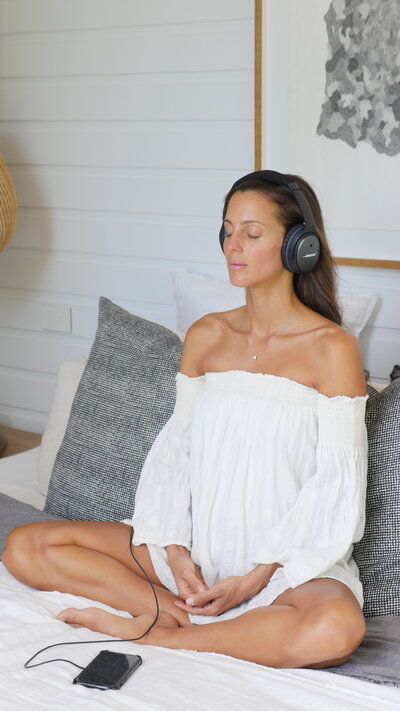
(Subscribe on iTunes, Stitcher, Spotify, iHeart or TuneIn)
What if the reason you feel stretched thin isn’t that you’re doing too little, but that you were taught to believe more effort always equals more reward? So many of us carry limiting money stories we never chose and push through every day as if rest has to be earned. The result is a life that looks successful on paper but leaves you tired, anxious about money, and wondering when it will finally feel like enough. It doesn’t have to work that way. You can heal your relationship with money, reclaim your time and energy, and still create everything you want.
Kate Northrup is a bestselling author, entrepreneur, speaker and mother who has helped thousands of women heal their relationship with money through her Money Love Course and her books, Money: A Love Story and Do Less. In this conversation, she shares how to rewrite the money beliefs you inherited, how she made just as much money working half the hours after becoming a mother, and why working with your natural rhythms instead of against them is the key to creating more. If you’re ready to stop pushing and start calling in a life of real abundance, this episode is for you.
In this episode we chat about:
- The path that led Kate to rethink everything she knew about money and time (03:19)
- The money story you inherited, and why falling in love with money is the smartest financial decision you’ll ever make (06:14)
- What to do when your partner doesn’t share your beliefs about money (14:48)
- Why doing less is the fastest way to get more done, in business and at home (19:51)
- The 20% of your actions creating 80% of your results (22:20)
- Why women and men experience time completely differently (26:50)
- How your monthly cycle can become your most powerful productivity tool (29:40)
- What it means when you bleed on the full moon versus the new moon (33:23)
- Why I’m 100% on board with network marketing (40:46)
- How becoming a mother forced Kate to work less and still earn the same (41:53)
- Why women need each other more than we realize (49:45)
- Plus so much more!
Episode resources:
- SHE Manifests (join here)
- Higher Self Visualisation Meditation (get the meditation)
- Best Day Brainwash (get the brainwash)
- Work with me (here)
- Shop all my meditations (here)
- Shop all my books (here)
- The Money Love Course (website)
- Origin® Collective (website)
- Do Less by Kate Northrup (Amazon)
- Money, A Love Story by Kate Northrup (Amazon)
- The Top Five Regrets of the Dying by Bronnie Ware (Amazon)
- WomanCode by Alisa Vitti (Amazon)
- You Can Heal Your Life by Louise Hay (Amazon)
- Join the Melissa Ambrosini Tribe on Facebook (Facebook Group)
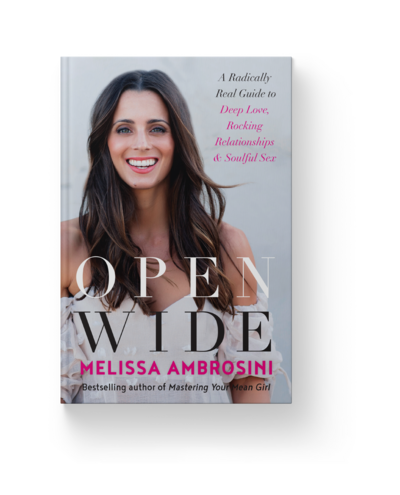
- Open Wide by Melissa Ambrosini (Amazon)
- Open Wide Video Masterclass (podcast)
Prefer To Read?
The following transcript has been automatically generated and not checked for accuracy.
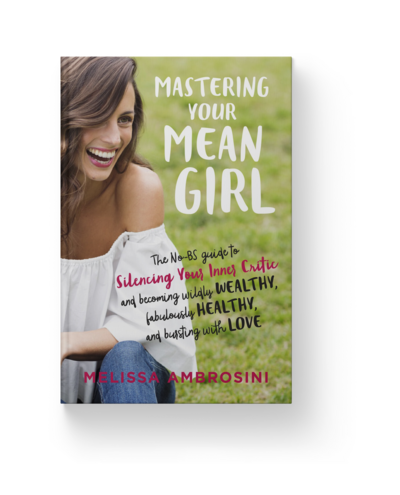
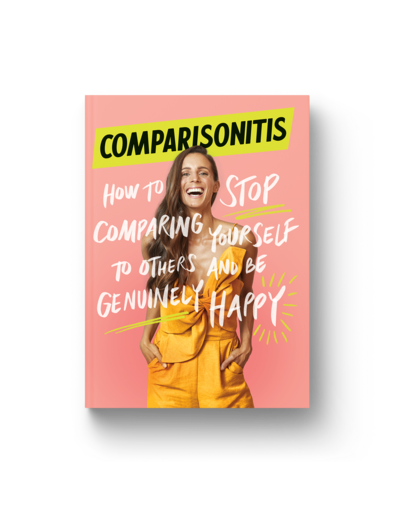
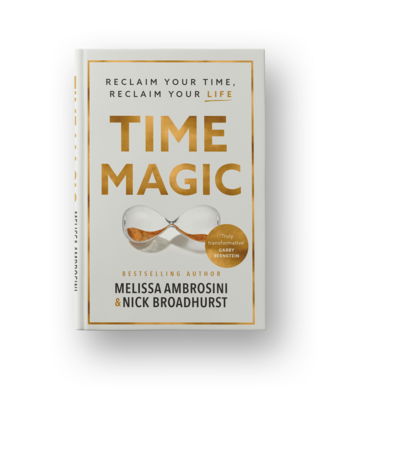
Melissa: [00:00:00] The Melissa Ambrosini Show. Welcome to The Melissa Ambrosini Show. I’m your host, Melissa, best-selling author of Mastering Your Mean Girl, Open Wide, Comparisonitis, and Time Magic. And I’m here to remind you that love is sexy, healthy is liberating, and wealthy isn’t a dirty word. Each week, I’ll be getting up close and personal with thought leaders from around the globe, as well as your weekly dose of motivation so that you can create epic change in your own life and become the best version of yourself possible.
Are you ready, beautiful? Hello, and welcome back to the show. I might sound different because firstly, I am whispering because I’m recording this right now while my kids are asleep in the other room. We are away on holiday on the Gold Coast because my brother is getting married, and I’ve lost my voice.
Well, I’m losing my voice, but [00:01:00] also, I don’t have my microphone here with me, but I had to share this episode with you. This episode is one of the most downloaded episodes of all time on my show, and it is with the incredible Kate Northrup, and I really feel like so many people need to rehear this right now.
If you don’t know who she is, she’s an entrepreneur, best-selling author, speaker, and mother. She’s built a global business, and her Money Love course has helped thousands of people heal their relationship with money. She’s also a best-selling author of Money: A Love Story and Do Less. Now, in this episode, she shares how to rewrite your money story that you inherited, and why falling in love with money changes everything.
We talk about what to do when your partner isn’t on board with your beliefs, and how she has made just as much money working half the hours after becoming a mother. And we go so much deeper, and [00:02:00] this is truly one of the most important episodes that you will ever listen to. And for everything that we mention in today’s episode, you can check out in the show notes, and that’s over at melissahambrosini.com/715.
You will wanna get your pen and paper out for this one, so buckle up. Let’s go. Let’s dive in.
Welcome, Kate. I’m so excited to have you on the show. But before we dive in, can you please tell us what you had for breakfast this morning?
Kate: I have scrambled eggs with spinach and an avocado.
Melissa: Ooh, yum. Yum, yum, yum.
Kate: And bulletproof coffee.
Melissa: Ooh, yeah.
Kate: Yeah. I’m just doing that these days for a little extra zhuzh.
Melissa: I love it. Now, one of the first books that I ever picked up on my spiritual journey, which really began back in 2010, was actually your [00:03:00] mom’s book, Women’s Bodies, Women’s Wisdom, and that’s how I first discovered you. And your mom’s been on this show, and since then, we’ve been in the same B-School circles for many years, and I’ve admired your work, especially your books and your podcast.
So I am so pumped to have you here today. But first, before we dive into your amazing books and all of the beautiful work that you’re doing in the world, can you tell us your story and how you got to where you are today doing the amazing work that you and your husband do for women all over the world?
Kate: Absolutely. So I, you know, I actually got started in business very young. I really started in direct sales actually when I was in high school. But then in 2010 I started a blog because I wanted to have a creative outlet, and only later realized that that could be a business, and I wrote my first book, Money A Love Story, and that did really well, except for the problem was that quite [00:04:00] shortly after it came out I didn’t really have anything further to say on money.
So at the time I felt quite creatively dried up, and I felt like everyone else who was in my circle who had had books come out around the same time and felt like contemporaries were moving ahead and I was not, and I felt like I sucked. And then, you know, during that period of time I ended up getting married.
I had a baby, and during my pregnancy with that, with my first child, Penelope, I was so tired. I have never… I am… You know, I, I meet women all the time who are like, “I loved being pregnant”, and I am not one of those women. I just like did not. I just was like, “This is a lot.” So I was so exhausted and I needed to, in order to just barely function, I was sleeping like 10 or 11 hours at night and taking three-hour naps.
I mean, it was ridiculous. And I [00:05:00] cut my work hours like in half, but my husband and I run our own company. We were about to have a kid. We don’t have, in the United States, any paid parental leave, and we didn’t have a company paying maternity or paternity leave. So we needed to get the same results income-wise with less than half the amount of work.
And then I had Penelope, and that was a, a, a somewhat traumatic experience for me and- Honestly, becoming a mother was just so shocking, and it was… That first year was the hardest year of my life. Penelope was sick. She was not a sleeper. We only had 10 hours of childcare a week, and yet we sat down the first year after she was born, and we had made the same amount of money as we had in years prior when we had been working twice as much.
And so I just thought to myself Well, what the heck was I doing all of those years- … or putting in all those hours if I could have [00:06:00] gotten the same results in half the amount of time? So that’s why I wrote this book.
Melissa: Oh, okay. So I wanna talk about both of your amazing books, but let’s start with Money: A Love Story, because that’s the one that you wrote first.
Yeah. Why is it so important that we fall in love with money and we reevaluate our relationship with money? And, and how do we do that?
Kate: Mm. Yes. So it is so important because we have to use money every day, and so it’s not one of those things like if you have a tumultuous relationship with drugs or alcohol, you can just…
I mean, I, I understand it is not easy, but you can stop using them, whereas money, we live in a society where you need money. And money is this thing that we sort of all agreed to participate in. And the thing is, we, as humans, we made it up. It really [00:07:00] doesn’t exist, and it’s just a stand-in. It’s a symbol for value, for what we value.
And so we really need to… You know, for me and for the people I’ve worked with, we’ve had over 5,000 graduates of our Money Love course, it’s about creating a loving relationship with our money so that it, it is no longer a source of stress and angst, but instead a source of freedom and joy and possibilities.
So it… You know, ’cause otherwise it just causes so much stress and friction every single day, all day long.
Melissa: Yeah, absolutely. So many people are in that state right now, where money is a cause of such stress, and relationships break up and break down over it. So how do we get to that place where money is a source of joy and, and fun and play and not so stressful?
How do we get [00:08:00] there? Because some people listening might be like, “Oh, my gosh. That feels miles away.”
Kate: Yeah.
Melissa: But how do we get there?
Kate: Well, first of all, I am a huge believer in examining where our beliefs came from, and that’s why I called my book Money: A Love Story, because we really need to examine the story that we’re carrying around, around money, examine the story that we inherited, really come clean on what our money story is, and then choose from this day forward to write a different one.
Because- There are people who are… And by the way, I also just wanna say it’s not about the amount of money. I know people who make millions who are not happy. I know people who make, you know, 30,000 a year who are incredibly joyful. So it is not… Now, at the same time, though, money brings us choices. And so it’s important to get honest and get real about where your money beliefs came from and what they [00:09:00] are, because that first step of awareness is so powerful for change.
And I’m sure, I mean, listeners of your show already are, I’m sure, on board with the notion that our beliefs create our reality to some degree. I mean, obviously, there are other forces going on in the world that are systemic, but there is a large degree to which our beliefs create our reality. And so that is so true when it comes to money.
So I, I believe in the excavation process and really doing that work to sit with yourself and, and find out who’s running the show and what beliefs are running the show. Because no amount of right financial management techniques can really change your money story. But once you change your money story, or once you own your money story and then start to write a new one, then the financial action steps that all the personal finance people are telling you to do but you can’t seem to get yourself to do, then you will do [00:10:00] them joyfully
Melissa: Mm.
Absolutely. And it’s often, you know, when we do that inner work, when we do that reflection and we get really honest with ourselves on whose money story we’re actually playing out. Like for me, it was my dad’s. You know, it was my dad’s story, and I was like, “Whoa, I have been living out my dad’s money beliefs for 24 years.”
This is, you know, in my early 20s when I realized this. 24 years. And some people don’t have this realization till a lot later in life, and I am so glad that I had this realization earlier on because I was able to see that his beliefs were what I was living out, and that actually wasn’t my truth. So I was able to rewrite my story, rewrite my money story, and create a different reality for myself from an, from very early on, which I’m just so grateful for.
And the thing is, is [00:11:00] everyone can do this. It just is a matter of- Yeah … sitting down and being really honest with ourselves and, you know, getting out your pen and paper and rewriting what you truly believe. Because, yeah, we can all do it.
Kate: Yeah, and there’s no reason that… I mean, there’s the, there’s how we were raised, and there’s the circumstances we were born into.
And again, there, you know, there’s prejudice, there’s, there’s, there’s, there are issues. Like, I don’t wanna say there aren’t issues in the world that hold people back that are outside their control, but there’s a lot that’s within our control. And there’s no reason that you can’t do this work to change- A large part of the reality.
Melissa: And what are some of the results that you have seen when people have rewritten their money story and fallen in love with money? What are some of the results that you’ve personally [00:12:00] witnessed?
Kate: Well, certainly, I mean, in my own life, I paid off $20,000 in debt in a couple of months and doubled my income, or actually quadrupled my income within a year.
And that was, that was due to doing the work that I write about in the book. But beyond myself, ’cause that’s not as interesting as of my- the people I work with, one woman I met this past weekend, actually, it was so cool. She said that she had had this desire to start a business for years and years and years, and she just had a lot of blocks about it.
You know, she wasn’t from an entrepreneurial family. She was scared. Uh, she, you know, scared of the risk. And she said that when she read Money A Love Story, and she, she… There was something in the way that she understood about money and value for the first time, that she finally got the courage to start her business.
And she and her husband now run this beautiful six-figure business and, and it was like the permission she needed to step out and create the freedom that she really craved. Also, [00:13:00] you know, paying off, paying off debt. For the first time feeling worthy of charging what you’re worth, whether it’s speaking fees or your consulting fees, launching online courses.
All, all kinds of amazing, amazing results. And a lot… One, one client of mine said after going through this work, she was having conversations with her husband of 20 years for the first time in their marriage without it ending in a fight.
Melissa: Wow, that’s amazing. ‘Cause it can really be a source of huge stress for a lot of people- Oh, absolutely
especially in their romantic relationships. That’s one of the most common things that people fight about is money, which is just such a shame. Because if two willing participants did the inner work and actually rewrote their stories, they could probably move through this, and, you know, there might be a lot less divorces.
Kate: I, you know, I really think you’re right. Mm. And I will say, money was a hu- huge part of, uh, factor in my parents’ divorce. And so [00:14:00] I am so vigilant about financial conversations in my own marriage, because having watched it go south, I really am committed, and I’m so grateful that I found a guy who’s also committed to doing his work.
Because it’s really not about the money, it’s about our wi- being willing to examine our own inner dialogues and beliefs and see where we’re holding ourselves back. And so, you know, if you are looking for a partner, I would recommend, like because I work with so many people who are like, “Well, what if my husband is just really in lack mentality?”
Or, “What if my partner is really in lack mentality and isn’t willing to do any work around it?” I’m like, that is really tough if somebody is not willing to look at themselves. So that’s just a little side relationship note. Find somebody who’s willing to look at themselves.
Melissa: I know. What do you do though if someone listening is having these light bulb moments, these realizations, and they’re willing, and they’re open, and they’re ready, and they [00:15:00] do the work, but their partner is just so closed, not interested, almost, you know, turns a blind eye to it?
Like what do- Yeah … what do peop- what do you do? I’m sure you’ve seen that in your, in your courses. Like, what, what have you, what have you seen work? What are some strategies, or is there anything that you can do?
Kate: I really think there’s always something we can do, and I think the best thing that we can do is do our own work.
Because nine times out of 10 when we are mad at somebody else for being a certain way, it’s because we are that way. And so, and I do believe that we attract our partners because they have, y- you know, their assignments. Because, because we have big lessons to learn together. And so the, the number one thing is to stay in your own lane, do your own work, and do your own healing work.
And even, you know, my husband and I are, we are always talking about stuff, always working on [00:16:00] stuff, totally willing to go to therapy for a tune-up every now and again. And yet, you know, of course he drives me crazy with certain things. I still will look at, like, okay, that thing is driving me crazy. How am I doing that in my life?
Or, or what is that shedding light on in my own way of being? Because the only thing… I love my friend Chris Carr says, “The only time you can change somebody else is when they’re in diapers.” And, and we can just only keep our eye on our own paper, and hopefully through our own behavior inspire the other person to shift or, or shift our side of the relationship.
Because when we shift our own behavior, the relationship can’t actually stay the same. So something also changes on the other side. It has to.
Melissa: And this applies to our children as well, not just our partners. Yeah. You know, we can’t change them. We can’t
Kate: No, we cannot. Other than their diapers, we are very much- Yeah
in that stage in my house. But we cannot. It’s really [00:17:00] to honor who they are. You know, my, my oldest daughter is, uh, she just is here to teach me lessons and, and she really has slowed me way down. I mean, since per my pregnancy with her, she is really the, y- you know, sh- the do less work came through Penelope.
It’s just… And I, w- I notice myself wanting to hurry her up all the time, and she’s just my little angel reminding me, like, “Slow down, Mama. Be here.”
Melissa: Mm. So beautiful. So beautiful. Well, I absolutely loved Money: A Love Story, and I think it’s so important that people do a little bit of inner work, look at their relationship with money, see where your beliefs are, whether it’s from your parents or a teacher or someone in your life, and rewrite your money story.
Because not only will you create maybe, you know, like you did, you paid off your debts [00:18:00] and, and some of your people, you know, started their business. But the freedom that you feel, you know, it’s like such a weight lifted off your shoulders when you heal your relationship with money. It’s so freeing, and I want to encourage everybody to reevaluate their relationship with it and do a little bit of inner work, because it is the best feeling when you are living in alignment with your truth, and that just ripples out into every area of your life
Kate: Absolutely.
And I also wanna say very much like a spiritual practice, I think this is a forever kind of thing. You know, I did so much healing around my money relationship in my mid-20s, and then getting married, and then having kids, and then our business expanding brought up so many more opportunities for financial healing.
So I also just wanna say get on the path and know that it’s par- it’s part of the journey, it’s part of becoming more of who [00:19:00] you are, and I don’t believe there’s this end point where you have to feel like, “Oh, gosh, I have to do all this work, and somehow I’m gonna get to this end point.” And that way we can be lighter about it and more, um, and have more fun with it-
Melissa: Mm
Kate: when we know that it’s kind of a forever thing.
Melissa: Yeah. Absolutely. And then, yeah, like you said, it’s like a new growth spurt. So you know- Yeah … you get married, and then you grow a bit more, and then you have kids, and then you grow a bit more, and then you start a business, and you grow a bit more. It’s, that’s the same in my journey.
I did a lot of healing in my early 20s, but yeah, I’m still, I’m still fine-tuning. I’m still on this path. I’m still here in this physical body going along my journey. So I love that you said that. It’s no, there’s no end point. It’s about continuously showing up, doing the inner work, and it’s so beautiful when you have a partner who’s also on board.
It just makes things a lot easier, that’s for sure.
Kate: It does indeed.
Melissa: Now let’s change gears a little bit because your second book, which I tore through, by the way, it was amazing, [00:20:00] so thank you so much for sending that to me. Now it’s called- You’re welcome … Do Less! A Revolutionary Approach to Time and Energy Management for Busy Mums.
But, you know, it’s not just for moms, so because there’s so many great practical tips and tricks on time and energem- energy management. So tell us about, you shared why you wrote this, but how can… Uh, you know, people listening will be like, “Okay, how do I do less but still achieve what I want to achieve and still make, you know, amazing money?”
How can we actually do that, and why is it so important?
Kate: Well, it’s so important. I’ll start with why it’s so important, then I’ll, and then I’ll tell you how. It’s so important because at the end of our lives, none of us will sit on our deathbed and wish we had gotten more done. None of us.
Melissa: Mm.
Kate: The, Bronnie Ware wrote a great book called The Five Biggest Regrets of the Dying, and they include things like wishing they had kept in touch [00:21:00] more with their friends and family, wishing they had given themselves more permission to live the lives they wanted as opposed to the li- lives that others expected of them, wishing they had allowed themselves to be more joyful, things like that.
And so none of those have anything to do with getting things done. So I just wanna be really clear. I think that our obsession with productivity as a culture is completely missing the mark. That being said, I am also an achievement-oriented person, and so I think we can have both. And I know, I know for sure that, that those first…
that, that year I was pregnant, uh, with my first and that first year of motherhood, the reason we were able to make just as much money as previous years when I was working twice as much is because I got laser focused because I had to, because I had such limited time, and energy, and bandwidth, and I was so profoundly sleep-deprived [00:22:00] that I just got so focused on what needed to happen in a short period of time, and I didn’t even have time or energy to think about it, to deliberate about it.
It just became instantly clear, like, this matters, this doesn’t. My boundaries got really good. And so how we can apply this, how I apply this now when my life isn’t quite as intense, is the 80/20 rule, number one. I just live and breathe this, and I’m sure that you apply this in your business as well, Melissa.
It’s to know that really and truly, 80% of our results come from 20% of our actions. And so in business or in your life, in your career, what that means is… and I, I offer this exercise right in the book, but I’ll just walk you through it real quick ’cause you can do it listening right now. Write on a piece of paper, draw a line down the middle, and on one side, on the left-hand side, write out the tasks that you do on a weekly basis in your job or in your business, and on the right-hand side, write [00:23:00] out your biggest career wins to date And then draw a line from the biggest career wins to date directly to the tasks on the left that actually resulted in those big wins.
And you will very quickly have a list on the left-hand side of your 20% that leads to 80% of the results. And then over time, the idea is to let more and more of the rest of the items go, and focus more and more of your precious time and energy on that 20%. I mean, there are many more ideas in the book, that’s not the only one.
But really, it’s like, to me, the 80/20 rule is the 80/20 of doing less. It’s like if you just did that, you would get so many results.
Melissa: Mm. It’s so interesting because six years ago, I became a stepmom, and that, for me, made me put a lot of things in perspective. And I did, I became so laser-focused, [00:24:00] where before that, I would just, you know, work all day, and I’m like, I’d get to the end of the days and I’d be like, “Okay, I achieved this and this,” but I was kind of sitting at my computer all day.
Where now, I sit down, I’ve got a couple of hours to laser focus, to get everything done that I need to get done that day before school pickup.
Kate: Mm-hmm.
Melissa: So there’s nothing like having kids to, to get more stuff done, to really focus that in. But what, what else? What are some other tips that you share in the book that allow us to actually do less but still achieve more?
Because you’ve got some data from Sweden and Mexico that prove that- The less work we do, the more productive we become. So how does that work?
Kate: Well, so what’s so interesting is that we are all kind of globally adhering to this 40-plus-hour work week, which is not based on data. It’s not evidence-based.
It’s actually [00:25:00] based on the Industrial Revolution, and it’s based on machinery. So I just wanna put that out there first to say it’s ridiculous that we are just showing up to sit at a desk for this. It’s, it’s actually an arbitrary number of hours. What the data shows is that we do about 24 to max 30 hours of focused work a week, and that actually even high performers, you know, novelists and athletes, and people who are really honing their craft, are only focusing four to five hours a day on anything that actually moves the needle forward in their work.
And then the rest of the time is just kind of, like, pushing papers around or answering meaningless- … emails or scrolling social media. And in Sweden, they’re actually moving towards a national work day, or sorry, work week of 30 hours a week, so a six-hour work day. And companies who have already implemented it are noticing that their employees are getting just as much done [00:26:00] in six hours a day as they were in eight hours a day.
So productivity has not declined at all because they are limiting meetings, they are off social media, and they’re not giving in to distractions, ’cause they know they only have these hours, and then they’re gonna go out and play with their families, or they’re gonna go take a bike ride, or they’re gonna, you know, go have a picnic or whatever.
And more importantly than productivity increasing, although that’s amazing, workplace happiness has increased a lot. And also, absenteeism is decreasing, and workplace drama decreases, which also saves a lot of time and energy because, you know, I know you, you work with a team, I work with a team. When there’s drama within the team in a company, it takes a lot of time and energy away from actually doing the work.
Melissa: Mm.
Kate: So working less leaves less of that.
Melissa: Yeah, I love that. And you talk about how men and women experience time differently, and how we can access our productivity blueprint. So can you talk a little bit [00:27:00] about that?
Kate: Absolutely. So I was so fascinated to learn this from Elisa Viti, who wrote Woman Code. And it’s so fascinating that, so, so hormonally speaking, men’s hormones cycle every 28 days.
I’m sorry, that is incorrect. Men’s hormones cycle every 24 hours. Women’s hormones cycle every 28 days. Now, this makes a lot of sense because we live in a patriarchy that is focused on the experience of living in a male body. And so all of our time and all of our time management systems and all of, you know, the corporate world and everything is set up, of course, for a 24-hour cycle.
And the idea is you’re supposed to reset and be exactly the same as you were the day before, if not more energized and more productive, right? And more like get out there and hustle But women, we are actually cyclical in a [00:28:00] very predictable way. But instead of over 24 hours, we have these same four energy phases as a man has within the course of a day, but we have them over 28 days.
And what’s so important to know about that is that as women, w- we ourselves have downloaded this idea that there’s something wrong with our bodies because they’re unpredictable, or we’re all over the place, or, you know, women act crazy when they’re having their period. Or, “Oh, you’re just, you’re just, you must be having your period,” like you don’t actually feel that way, right?
There’s so much discrediting of the female experience. And what’s so important to know is that we have these four energetic phases over the course of a month. Now, and by the way, I just wanna also say if you’re pregnant, if you’ve had a hysterectomy, if you are post-menopausal, this still applies because these four phases of a woman’s cycle are mirrored in the four phases of the moon.
And our bodies are made [00:29:00] up of more than 60% water, and we actually are in tune as humans to the moon because of our water content and because of the fact that the moon creates tides. And studies actually show that, that there are instances linked to the full moon, like an increase in hospital visits, an increase in accidents, so we are, we are lunar creatures.
Melissa: Yeah. Absolutely. I talk a lot about this in my book Open Wide as well, and I just think it’s so important that as women, we start to get in tune with our cycle. And I love that you talk a lot about this in Do Less, and I’m a massive fan of charting and just starting to really become in tune and, and looking at how you, your energy is over the month.
So how does that apply to our working style and getting things done? How does that apply?
Kate: Yeah. So I think [00:30:00] it’s really important to know what these four energetic phases are. So if you’re tracking the moon or the l- or your menstrual cycle, I’ll just kind of lay out what the phases are. There’s the menstrual part of your cycle when you’re bleeding, and that is the same energy as the new moon, and that’s the time when it’s a great time for rest and reflex- and reflection.
And your brain will actually be the most wired for connectivity between the left hemisphere and the right hemisphere, and you, your intuition will be the strongest as a result of that. So you’ll actually get your most intuitive information and your most spot-on wisdom during that time. Then there’s the follicular phase.
It’s the same energy as the wa- as the waxing moon, when the moon is moving from new to full. And that energy is really kind of springtime energy. It’s the energy of f- of fresh starts, and new beginnings, and brainstorming, and initiating things. And then the [00:31:00] next phase is ovulation, or the full moon, same energy.
That’s the time of peak fertility, and cross-fertilization, and peak receptivity. It’s a time when you really want to be out there. Like, you really feel like going to a cocktail party. You, you’re, you’re the most verbally communicative, verbally fluent during this time, the best communicator, and you’re also the most magnetic to your desires, whether that’s literally, you know, to get pregnant or to metaphorically get pregnant, ’cause we all metaphorically are looking to get pregnant with something.
Okay, just one more, which is the luteal phase in your menstrual cycle or the… It’s like an autumn energy. It’s the waning moon, and it’s really a turning within time. It’s a time to bring things to completion. Culturally, we have, we have trouble bringing things to an end. You know, we think that things ending means that they failed somehow, but I…
But there are things that just only have a timeline of however long they [00:32:00] have. So as a culture, we like to, we kind of skip over this phase, this energy of completion and tuning, and turning within. But it’s an, a really important energy, and to know that we will go through all of these during a month. But I really like to look at projects from these four energetic signatures as well, to know that your projects, whether it’s writing a book, launching a podcast, you know, coming up with a, with, uh, some sort of new program, those projects will also have these four energetic signatures, so that you can begin to track and realize, oh, there actually is a time for the pause.
There’s a time for initiation, there’s a time for launching, and then there is a time for completion. But as entrepreneurs or achievement-oriented people, we tend to go from the springtime energy right into summertime, back into springtime, back into summertime, back into springtime, back into summertime.
And then we get so tired, and exhausted, and burned out, and over time, our work actually suffers. [00:33:00] So the depth of our work Will suffer, and the power of our work will suffer when we are just doing the two energetic phases of sort of spring/summertime versus also including the bringing things to a close and then the pause.
Melissa: Mm. That’s why that downtime, that reflection, is so- Yeah … important. I love this, and it’s so fascinating. But what if you don’t bleed on the new moon and you bleed on the full moon? How does that- Yeah … then work?
Kate: So I found out, this is really cool, you know, because if you follow, if you follow the moon and if you’re kind of into spirituality, you may know that w- when women are not exposed to artificial light, they do tend to bleed on the new moon.
However, in community, however, I found out that back in the day when there was not artificial light, there was a group of women, a smaller group of women, that would bleed on the full moon because [00:34:00] traditionally, women who were bleeding, they rested, right? ‘Cause that’s what our bodies feel like doing. So believe it or not, they actually did that.
And then the women who were bleeding on the full moon were then able to take care of the women who were bleeding on the new moon, and then vice versa. So there was always someone there to nurture, always someone there to care because nature is so genius, it takes care of everyone, and it takes care of everything, and our bodies are wired to do that.
But if you are… That was just a side note. I think it’s interesting. But if you are bleeding on the full moon, if you have your period on the full moon instead of the new moon, it just means it’s a different energy of it. And so I like to go with body first, so I follow what my body is doing first, and then I kind of add in the flavor of the moon.
But for some women who have irregular periods or are pregnant or nursing or, you know, are past menopause, whatever, the moon is such a great thing to track, uh, i- in terms of cross-referencing our energetic patterns with the moon [00:35:00] because the moon is so predictable, right? I mean, you could look out to, at a lunar calendar for 50 years in the future.
So that’s kind of a nice thing to track against if you don’t have a regular cycle to follow.
Melissa: Mm-hmm. Okay, cool. So interesting, and so… Oh my gosh, it’s so fascinating. I just love it. And when I started doing this a couple of years ago and really got into it, I Finally allowed myself to slow down and to take those more rest, that, that rest period.
I really allowed myself to do that, and do you know what happened? I achieved more. I got more done. Yeah. I wr- I wrote two books. I launched a podcast. Yeah. I created programs because I allowed myself to stop. And even now, like on my first day or two, or, you know, however I’m feeling, it’s literally a whole day just for me.
And- Mm … especially that first day, I just- Yeah … I just rest. I mean, I don’t have small children, [00:36:00] but I just rest. And, you know, maybe I spend time in nature, but that is my day just to really soak up the relaxation and, and do what feels good for me, and I cannot tell you how much that has impacted my work just by doing that one thing.
And I know there is a couple of, I think, I think it is Sweden, I can’t remember of exactly, but they are implementing, you know, bleeding days in their, in their workforces, where on their first day- Really? Yeah, on their first day, the women can, can stay at home or can work from home, which I just think is amazing.
Kate: That’s amazing. I love, love, love, love, love hearing that. And, you know, I just also wanna say how ridiculous it is that, that it’s still culturally such a taboo to talk about our period, given the fact that it is responsible for human life.
Melissa: Mm.
Kate: So I love that, you [00:37:00] know, that Sweden is at the forefront there, just making that a national thing.
How cool.
Melissa: I think it’s Sweden. Don’t quote me on that. I can’t remember, but you
Kate: know- I’ll Google it afterwards.
Melissa: Yeah, yeah. But yeah, it’s really interesting, and I just think it’s so important that we take that time for ourselves. And, you know, some people, they might not be able to because of their work or whatever, but- Yeah
you know, even if you can’t, maybe it’s just getting, you know, up in the morning and, and doing something for yourself, whether it’s just some breathing or a meditation, just to fill yourself up- Yeah … as much as you can.
Kate: Or even, you know, I remember my mom talked about this. She was, you know, she was delivering babies.
She was up every third night. It wasn’t, she really couldn’t, like, take a break, per se. But she would just, you know, walk to the door of the hospital just, like, a little bit slower. So we can all do, like, just walk a little slower to the grocery store or, or whatever it may be. You know, maybe [00:38:00] instead of straightening up the living room that night and putting away all the toys, you just sit on the couch and read a book.
Melissa: Mm.
Kate: So a little can be really, really impactful.
Melissa: Yeah, so simple. It’s just those little things that make such a big difference.
Kate: Yeah.
Melissa: So in the theme of always growing and evolving, what’s something that you’re working on within yourself at the moment?
Kate: Oh, well, I’m so glad you asked because it’s right on track with your book.
Now with, with your book Open Wide, which I am in the middle of reading right now and very, very much enjoying, thank you, and I am loving really looking at- My own body and my sexuality because I have, I have, uh, my second daughter is now a little over one, and I feel like I’m in this place in my life of a reclamation, like of my, I, you know, my sexuality as a woman.
Like I’ve gone through this portal of becoming a [00:39:00] mother and, and I’m, I’m wanting to bridge the split between motherhood and sexuality just in my own experience. And so I’m just very interested in learning about it, talking about it, trying different practices. You know, one of them for me is, has always been dancing, so that’s really exciting for me, and that’s kind of what I’m like noodling about the most these days.
Melissa: Oh, I love that. Yeah, I love dancing as well. It’s so beautiful. It’s just so freeing. But I’d love- Yeah … to know, were you someone who, because you’re very driven and you’re type A, you’re very much like me, we, we love to achieve. When, when you were considering having a child, was it something that you toyed with?
Were you like, “Oh, but, but you know my career, and oh, but I still wanna have a child.” Like, was it or were you like, “No, I wanna have a child.” Like, because I know a lot of women sit in that middle, and then there’s some women- Yeah … who are just like, “No, I’ve always wanted to be a mom.” [00:40:00] So where did you sit in that spectrum?
Kate: I always wanted to be a mom, for sure. And interestingly enough, I thought that I wanted to be a stay-at-home mom. I had built my first business in direct sales so that I could make enough residual income to stay home with my kids someday. And, and I did that. And then I had kids, and then I was like, “I don’t wanna be a stay-at-home mom.”
So it’s just so, you, we, we just never know, you know. We never know what life is going to hold. And, um, I obviously love my children, but I really love my work, and I am so grateful that I get to do both. Yeah, but I always was super clear that I was gonna be a mom. But it’s been way harder than I ever expected.
Melissa: Yeah. Wow. And how was it having that, uh, you know, your direct sales, your network marketing business? Like, how did that feel for you having that security there whilst you embarked on this pregnancy [00:41:00] journey?
Kate: Well, it felt so good. I mean, I had worked on that for, let’s see, when I got pregnant I was 32, so I’d been growing that for 14 years really with the intention of setting myself up for that moment financially.
And we still needed to work on it. It wasn’t like it just came in completely automatically. But it felt great to have that foundation at least that we could grow from and know that, you know, if worst case scenario we really couldn’t, couldn’t work, that we had some, we might have needed to back down our lifestyle some, but we could have made that work financially, um, and taken a full break for a little while.
We didn’t end up doing that. Well, I took three months off with Penelope, but, but it was, it was, made that initial year a lot easier and I’m, I’m grateful for it.
Melissa: Mm, that’s the beautiful thing about network marketing.
Kate: Yeah. Yeah.
Melissa: How has motherhood changed you?
Kate: Oh, it has just given me so much compassion [00:42:00] for humanity Just like I, I thought I was going to be somebody who just because I wanted to be a mom my whole life, I just sort of assumed it would be easy for me.
And yet suddenly being in charge of keeping this little person alive, and then with the hormonal changes and just the massive identity shifts, and I was just so shocked by how exhausted I was, how my life had shifted so dramatically overnight, and I didn’t realize how much I loved having my freedom. And so I think that, I think that f- that motherhood is just, it, it really sounds dramatic, but it’s really broken me down in the best of ways.
I think that things that, that are very, very difficult and break us down, they make us softer and in many ways more resilient. Like, I feel like I am just a much so- softer, but at the same [00:43:00] time stronger person. And I love that because there’s this common experience of, of bringing humans into the world or shepherding them through the world, I feel like I can relate to almost everybody on a level that is so beautiful.
You know, I can connect with other people, especially, especially mothers, but really everybody because moth- birth for sure, and then being a mother has just put me in touch a little bit more with the heartbeat of what being human is all about, and I think I wasn’t quite as connected to that before.
Melissa: Mm, that’s so beautiful.
So beautiful. Now, let’s pretend that you have a magic wand, and you could put one book in the school curriculum of every single high school around the world. Now, besides your two books, let’s pretend that they’re already there. What is the one book that you would choose?
Kate: Oh, this is so hard. I [00:44:00] love books so much.
I mean, I’m obsessed. I read so much. Um, but you know what? The one that came into my mind first, which I’m gonna have to go with, is Louise Hay’s You Can Heal Your Life.
Melissa: Yes. That was my first book that I read on my journey. Mm. That was the first book that I picked up when I hit rock bottom in 2010 and was in hospital.
Someone gave me that book, and that was the book that changed my life. So- Yeah … I love that book, and it’s, it’s amazing. And I had hoped to write a book where someone would say, “Your book was the Louise Hay’s You Can Heal Your Life,” for them. And someone said that to me at the m- the book launch- Oh … of my first book, Mastering Your Mingles, and I just, like, burst into tears, and I was like, “Oh my gosh, so beautiful.”
Kate: That’s a great moment.
Melissa: It was. It was. So now let’s talk about how your days look. Like, do you have a morning routine? You and your husband work from home. You’ve got two [00:45:00] little kids. I love hearing about how people set themselves up for the day. So can you kind of give us, I know no two days are ever the same, but can you kind of give us a little run-through of how your day runs, and in particular, your morning routine?
Kate: Yes. I always, the morning routine question really cracks me up, and I will tell you why. I have two little kids who are very early risers. So, like, today, my day started at 4:44-
Melissa: Whoa …
Kate: with my baby crying, and she would not go back to sleep. So then she got into bed with me, and I nursed her, hoping she would go back to sleep, which she did not.
So we went down at 5:15, at which point my preschooler popped her head out of her room and was up and awake. And so we headed downt- downstairs, and then I put the water on for coffee and fed the baby. And then, so I will say my morning routine is, like, at this point- It [00:46:00] is a little bit, it’s a bit chaotic due to how early my children wake up.
And I know people say like, “Oh, just wake up before your kids,” but I just like am not gonna get up at 4:15.
Melissa: No.
Kate: So that’s where I’m at right now. However, I will say once the, once we get the girls either at their daycare or with our babysitter, then I really take some time for myself. So I will sit at my desk and, or in the chair in my office, and I’ll do just like a quick five, 10-minute meditation.
And then I always set myself up for the week with my weekly planning ritual, and this is really important to me. The weeks I don’t do it, I really am quite thrown off. About a y- two years ago, I moved from a daily to-do list to a weekly to-do list, which has given me so much more space and ease and grace in my life, because I have, was finding that with my daily, I always felt like I was coming up short.
But with the weekly, because like life is so uncontrollable with small children, and so [00:47:00] the weekly helped me so much because I automatically, by p- making a weekly to-do list, was much more vigilant about not putting things on there that I, that weren’t gonna get done because it was, it was fewer things spread over more time, if that makes sense.
And so that to-do list sits on my desk, and then at the beginning of the day, I just really kind of take a look at that. And, um, I also, it’s very important in our household, there are no phones in our bedroom. So our phones get plugged in downstairs, usually about at 8:00 at night, 7:00, 8:00 at night. And then the end of our evening is spent just me and Mike together, not with technology and not with our kids.
So I think that evening routine makes a huge difference because then the first thing I’m doing in the morning is not checking my phone.
Melissa: Yeah, so important. Yeah, we’re the same. Don’t charge our phones in our bedroom, don’t have them in the bedroom. Yeah. It’s just a small little tweak that actually makes such a huge difference.
It’s huge.
Kate: Really does. It’s huge. And when I do, like if I stay in a hotel or whatever, [00:48:00] I notice it’s like, it’s like crack. It’s really hard to not check my phone first thing when it’s right there.
Melissa: I know. I know. I notice that too when I’m traveling for a speaking gig and I’m in a hotel. Yeah. I’ll just be like scrolling Instagram at like 9:00 at night, and I’m like, “What- I know
the hell am I doing?” Like- … I don’t do this at home. Why, why do I- Yeah … do it here?
Kate: I know. It’s like this really bad behavior that really seeps in. So I’m just, you know, here I am on book tour trying to remain vigilant to that.
Melissa: Yeah. Good. Good, good, good. So important. Thank you for sharing that. So I’d love to hear now, what are three things you’re most recently grateful for?
Kate: Hmm. Well, I am so grateful for, uh, this past weekend I spoke at an event, uh, here close to home called Ignite Your Soul Summit, and it was just a room filled with 450 vibrant, big-dreaming women. And a few great men. And I was so grateful for the opportunity to take the stage and then spend time with these women.
Like, there [00:49:00] is just nothing like hanging out with a good group of women. I, for me, I just, I love it so much. So that was, that’s number one. And number two, so, so, so grateful for my husband and the way he’s been holding down the fort while I’ve been on airplanes with this book launch. He’s just such an incredible man.
He’s such an incredible father. And, you know, with no resentment, no complaining, he’s just, like, all in, and I’m so grateful for that. And then I am grateful here in the US, I’m grateful for the springtime. It’s really, my birthday is the first day of spring, and springtime for me always just heralds this feeling of rebirth and anything’s possible, and I love it.
Melissa: Beautiful. Well, that’s so exciting. So how important do you think it is that we… For me, you know, our soul sister friendships, our, our women, you said, you know, being with women really lights you up. How important, uh, is it for you that you do [00:50:00] that? You know, is it something that you consciously do on a weekly basis?
Is it something, you know, now that you’ve got two children, like, how do you make sure that you are getting your soul sister sisterhood top up in your life? Like, is it something that you consciously schedule, or are you a little bit more relaxed, and when it happens, it happens?
Kate: It’s a top priority for me.
So I will make sure that at least once a week, I’m at least having a Skype date with a girlfriend, or a phone call, or a coffee date, or a walk, or, or something. So y- you know, my life is full. I do have the kids, so when I’m not working, I am mostly with the kids. But if it’s, you know, that I get a babysitter and Mike goes out for the night by himself, and I go out with girlfriends or whatever it is, it’s a top, top priority for me.
Um, and a lot of times I’ll voice memo back and forth with my girlfriends. So even if we’re not, like, talking in real [00:51:00] time, we’re pretty connected on a weekly basis anyway, and that’s incredibly nourishing, ’cause I can listen to the voice memos, you know, on my way to pick the girls up at school. Like, I kinda listen to voice memos from my girlfriends like I listen to podcasts.
Melissa: Mm. Yeah, I do the same. We have an app called Voxer, and- Yeah … it’s just, yeah, voice memos, and it’s so much better than texting. Like, I don’t like texting. I wanna hear your voice. And it is, especially when you live interstate and you don’t have, you know, those close friendships that live around the corner, it’s a really beautiful way to…
I mean, it’s the best, uh, uh, of what we can do, you know? It’s- Yeah … FaceTime is also really amazing, but not, you can’t always do that. But I think it’s so important that we nurture those relationships and we stay in touch regularly. But for me, nothing beats the in-person. Like, it’s just, you know- I know
it’s so good. It’s so good. And I heard on your podcast just recently, you had, like, a three-hour dinner with one of your friends, and you, you don’t even remember to [00:52:00] pull your phone out and take a photo. Like, that’s- Yeah … that is the best. That’s when you know it’s, like, a good conversation. And I’m the same.
Like, we have people over for dinner, and I make them put their phones away, and- I
Kate: love that …
Melissa: and they’re always on silent. And I’ll get up and, and walk over to the oven and see what the time is, and, like, three and a half hours has gone past. And you’re like, “What?”
Kate: I know. That’s that, you know, that’s what, uh, that’s the timelessness.
That is the, the kairos time, this idea of suspended time when it neither feels long nor short. We’re just where we are. It’s so beautiful, you know, to find ways that we can live our lives more often in kairos, and that’s time, time with my girlfriends and sometimes guy friends, but mostly girlfriends, uh, is absolutely that for me.
Melissa: Yeah. Absolutely. And I always say to my husband, “Let’s do more things that make us forget to look at our phone.” So-
Kate: Yes …
Melissa: [00:53:00] whatever those things are, whether it’s, like, even going to the cinema or going- Yeah … and watching some live music, do more of the things that make you forget to pick up your phone because it is so habitual now.
It is so habitual. Like, I find if I’m just, like, sitting on the couch, I’ll just pick it up and I’m like, “What am I doing?” Like, don’t do that. Don’t do that.
Kate: You know, I’ve started to put my phone in my desk drawer-
Melissa: Yes …
Kate: when I’m working because I’ll notice, like, I’ll get stuck writing a blog post, and it’s not flowing or something, and then, and then I’ll, I’ll, like, pick up my phone, and it’s just, I know I s- it’s such a bad habit.
So if I’ve noticed if I don’t physically see it, I don’t do that, and so that’s been really helping me.
Melissa: Oh, yeah. I’m exactly the same. So when I’m working at my desk, it’s in the drawer, and- Yeah … when we’re eating dinner, it’s in the cupboard where it charges. Yeah. Like, out of sight, out of mind, and it’s so, it actually really, really works.
So if you are struggling with that, put it away, get it out of your sight, and that will [00:54:00] help.
Kate: Yeah, it really does.
Melissa: Okay. I’ve got three rapid-fire questions for you now. Are you ready?
Kate: I am.
Melissa: What is one thing that we can do today for our health?
Kate: Get as much sleep as possible.
Melissa: Yeah. Love it.
Kate: Or as much sleep as you need.
Maybe not as possible, but as much sleep as you, as you need and as you can get in this particular season of your life.
Melissa: Yeah. Beautiful. What’s one thing that we can do for our wealth, so more abundance in all areas of our life?
Kate: Pay attention to the things that already f- feel abundant in our lives right now.
Melissa: Yeah, beautiful. And what’s one thing that we can do for more love in our life?
Kate: Be more loving of ourselves.
Melissa: Yeah, so, so simple, yet something that so many of us struggle with, but it’s so important.
Kate: Yeah. Yeah.
Melissa: Now, is there anything else that you wanna share, any last parting words of wisdom, [00:55:00] anything that I didn’t ask you about that you wished I had have asked you about, anything like that?
Kate: Nothing that I wish you had asked me about, but I will end by saying that the world really needs us present. The world does not need us busy. Rushing is a surefire way to turn our light down and keep us away from our power. So finding that space, finding that stillness, slowing down, tapping into the cyclical nature of our creativity, our bodies, our lives, is really the ticket, as you shared, for getting more done, but also, more importantly, being more impactful, being more powerful.
Melissa: Hmm, I love it. One of my favorite mantras is there is no rush. Yeah. Mother Nature does not rush, yet everything is accomplished, and it’s such a nice reminder. And this has been so beautiful. It’s been awesome to [00:56:00] finally chat to you and to hear your wisdom, and I wanna thank you for the amazing work that you do in the world, and for the books, the podcasts, everything that you guys do, and all the love that you’re putting out there.
It’s so important, and I’m so grateful for the light that you’re shining. And I’m a massive believer in service, and I wanna know how can I and the listeners serve you today. What can we do to serve you?
Kate: Oh, what a beautiful question. Thank you. You know what? Getting a copy of Do Less, or if you already have one, sharing it on social, or, you know, you could share it by passing it along to somebody, is it’s really my mission to remind women of how powerful they are through breaking the addiction to busyness.
So that’s, that’s my service, so that’s how you can be of service to me in that mission.
Melissa: Yeah, it’s so good, guys. Both of Kate’s books are amazing, and her podcast, The Kate and Mike Show, is bloody hilarious. [00:57:00] You and Mike are so funny. Like, I just love listening to you guys so much. You give so much great advice, but just the banter back and forth is just really, really funny.
You remind me of Nick and I so much. And I wanna thank you for your time today, for all of your wisdom and your love, and for the work that you do. I’m so grateful that we’ve been able to connect, so thank you so much for being here.
Kate: Thank you so much for having me. This was so fun.
Melissa: How amazing was that? I truly hope you got so much out of that. I hope you have pages of notes, and you are going to implement everything that we spoke about. Come and tell me on Instagram what you got from this episode, your biggest key takeaways, and what you’re gonna implement this week. I would love to connect with you and hear from you.
Now, if there is someone in your life that you can think of that would really benefit from this episode, please share it with them right now. You can take a screenshot, share it on your social media, email it to them, text it to [00:58:00] them. Do whatever you’ve got to do to get this in their ears. And until next time, do not forget that love is sexy, healthy is liberating, and wealthy isn’t a dirty word.
Thank you so much for listening. I’m so honored that you’re here and would be SO grateful if you could leave me a review on Apple podcasts, that way we can inspire and educate even more people together.
P.S. If you’re looking for a high-impact marketing opportunity for your business and are interested in becoming a sponsor for The Melissa Ambrosini Show podcast, please email [email protected] for more information.
P.P.S. Please seek advice from a qualified holistic practitioner before starting any new health practice.












show Comments /
hide comments
- Hide Comments