



(Listen & Subscribe on Apple Podcasts, Stitcher, Spotify, iHeart or TuneIn)
Do you want better, deeper, more intimate relationships?
If yes, you are going to LOVE this conversation.
Esther Perel is a relationship guru, and while she views herself as a student of relationships, she is unquestionably at the top of the class. She’s now sharing all of her knowledge and advice on how to succeed in any relationship we choose by being the best version of ourselves.
We live in a time when many relationships and marriages aren’t thriving or lasting and on the other hand, dating has become more stressful rather than something to get excited about. More than ever, we need love. We really have to rediscover the allure, excitement, and even serendipity of love.
Esther is here to share her knowledge and show us how to make dating fun, improve and deepen our relationships, and so much more. Regardless of whether you’re single or in a relationship, this episode will be a game changer for you.
About Esther Perel
Psychotherapist Esther Peral is a relationship and love expert recognized as one of today’s most insightful and original voices on modern relationships. She is a best-selling author, TED speaker, and the host of the hit podcasts Where Should We Begin? and How’s Work? Additionally, she speaks nine languages and coaches couples around the world. Most recently, she launched her extraordinary card game ‘Where Should We Begin: A Game of Stories,’ a card game that is reshaping and deepening relationships all over the world.
In this episode we chat about:
- Her tips on how to thrive in all relationships (4:51)
- How to keep the romance alive and the honeymoon phase forever (9:40)
- How to let go of resentment (14:13)
- How to take your relationship to the next level and make it so much juicier (17:54)
- How to move past conflict with as much easy and grace as possible (26:16)
- The ecology and dynamics of a relationship and how to keep the relationship alive and thriving (29:47)
- How to make dating fun and soul-nourishing (39:44)
- Why she created the card game Where Should We Begin: A Game of Stories (46:12)
Episode resources:
- Higher Self Visualisation Meditation (get the meditation)
- Best Day Brainwash (get the brainwash)
- Book your 1:1 Strategy Session with me (book here)
- The ICONIC Mastermind (join now)
- Mastering Your Mean Girl by Melissa Ambrosini (book)
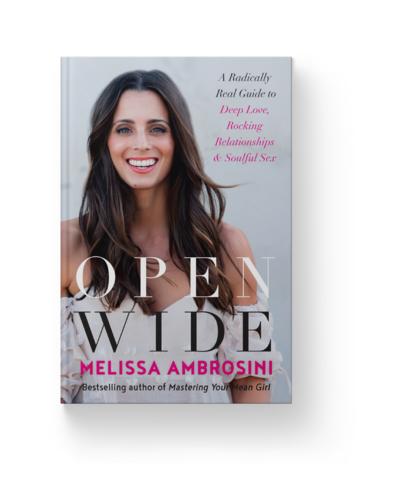
- Open Wide by Melissa Ambrosini (book)
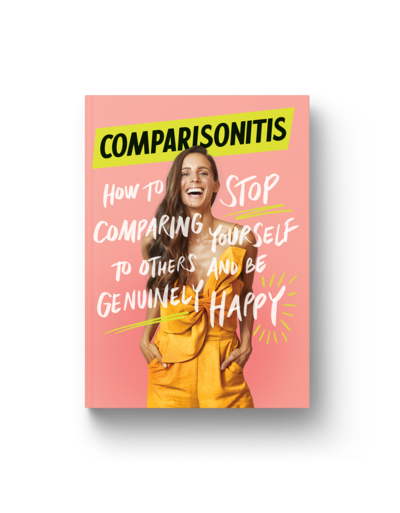
- Comparisonitis by Melissa Ambrosini (book)
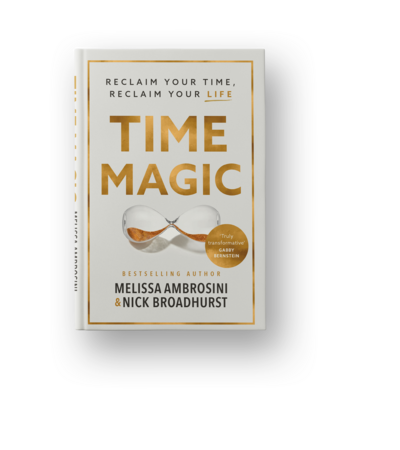
- Time Magic by Melissa Ambrosini and Nick Broadhurst (book)
- Esther Perel (website)
- The State of Affairs: Rethinking Infidelity (book)
- Mating in Captivity: Unlocking Erotic Intelligence (book)
- Esther Perel (instagram)
- Esther Perel’s TED Talks (watch)
- Where Should We Begin? (podcast)
- How’s Work? (podcast)
- Where Should We Begin – A Game of Stories (game)
- Man’s Search for Meaning (book)
- The Art of Loving (book)
Prefer To Read?
The following transcript has been automatically generated and not checked for accuracy.
Melissa: [00:00:00] The Melissa Ambrosini Show. Welcome to the Melissa Ambrosini Show. I’m your host, Melissa,
best-selling author of Mastering Your Mean Girl, Open Wide, Comparisonitis, and Time Magic.
And I’m here to remind you that love is sexy, healthy is liberating, and wealthy isn’t a dirty word. Each week, I’ll be getting up close and personal with thought leaders from around the globe, as well as your weekly dose of motivation so that you can create epic change in your own life and become the best version of yourself possible.
Are you ready, beautiful? Hello, and welcome back to the show. I am so excited, and I’m so grateful that you are here because I have recorded over 700 episodes over the last nine and a half years, and I have had the privilege of sitting down with some of the greatest thought leaders, [00:01:00] experts, doctors, global speakers, the people that wrote multiple New York Times bestselling books.
I have had the privilege of having them on my show and having conversations with them. So today, I wanted to go back into the archives and share one of the most downloaded episodes of all time, and this is with the incredible Esther Perel. If you do not know Esther, she is a psychotherapist and one of the most original voices on modern love and relationships.
She is also the best-selling author of Mating in Captivity and The State of Affairs. Her TED Talks have been watched by millions of people around the world, and she hosts the podcast Where Should We Begin? and How’s Work? She speaks nine languages, works with couples all over the world, and she even created a card game called Where Should We Begin?
I have this card game. It is amazing. I love whipping it out at dinner parties. [00:02:00] Get ready for pee your pants laughter. That’s all I’m gonna say. Now, it is designed to help people have deeper conversations with the people closest to them. So if you’re interested in that, check it out. Now, she calls herself a student of relationships, but honestly, she is at the top of the class.
Like, I think she’s getting A+++++. In this conversation, she shares how to keep romance alive long after the honeymoon phase, how to finally let go of resentment, how to move through conflict with more ease and grace, and how to make dating feel fun and nourishing again instead of exhausting. Whether you are single, newly in love, or 10 years into marriage, or 13 years into marriage like me.
13 years, can you believe it? And if you are there, and you need more spark, there is so much in this episode for you. So press play, pour yourself a cup of tea, and enjoy this special episode with the one and only [00:03:00] Esther Perel.
Esther, welcome to the show. I am so excited to have you here. But before we dive in, can you tell us what you had for breakfast this morning?
Esther: Oh, for breakfast. I had, um, eggs. Eggs and, uh, toast. That was very simple.
Melissa: I love it. Yeah. Simple is so good because you don’t have to think. It’s just there, you do it, it’s easy.
Esther: Indeed, indeed. And then I went skiing. We have full of snow here.
Melissa: Beautiful. Well, I am not full of snow over here. No, I know. We are full of sunshine and the complete opposite.
Esther: I, you know, I was in Australia just very recently, so I actually this notion that you can have Christmas in the summer is a very t- thought bender, you know?
Melissa: Absolutely. What did you think of [00:04:00] Australia?
Esther: It was my second time. I had a wonderful time. It was my first ever multi-city tour, so that in itself was a very new experience, and, uh, I was beautifully received and had quite a series of wonderful interactions with people. So, um, you know, I knew Sydney a little bit and Melbourne, I had been a week in each, but I got to just, you know, there’s this thing about coming back to a place so you don’t have to do the big touristy things the first time, that you do the first time, and then you just sink into the place and meet people, and I think for me, that’s really the biggest thing about visiting a city, is the people who live in that city.
Melissa: Yes, yes. The relationships that you form, the relationships that you deepen, the relationships that you build. It’s so beautiful.
Esther: Yeah,
Melissa: yeah, yeah. I have loved your work. I’ve been following your work for many years, so I’m so excited to have you here today. You are somewhat of a [00:05:00] relationship guru, you know?
You really help people with their relationships.
Esther: Student.
Melissa: Student, exactly. We’re all students forever.
Esther: We’re all students, yes.
Melissa: Something I really wanna ask you, and I’ve, and I’ve been thinking about all of the questions that I have for you, and something that keeps coming up for me is, how can we be better partners?
Because half of the marriages are ending, or quote, unquote “failing.” How can we really thrive in our relationships?
Esther: Many, many ways. You know, there’s not one answer to this. But the interesting thing, maybe just to start, is that I would want to invite us to think that because it ends, it doesn’t always mean that it failed.
Sometimes people have been together 20, 30 years, a relationship ends, and it was a good relationship. It, it ran its [00:06:00] course. The, we don’t always measure success by longevity. Lots of people have stayed together, you know, that didn’t particularly care about each other too much. But- The question is when you ask people about their relationship, do they feel that they bring the best of them to the relationship?
Or do they often feel that they give the best of themselves at work, maybe to their friends, maybe to their children, and a little bit left for the romantic partner, um, or for themselves for that matter. So in that sense, if you notice that you bring the best of you elsewhere and the leftovers come home, you’re, you don’t have enough resources to create the thriving relationship that you want.
There are probably two things that jump up to me immediately when I think about what, what gives a relationship a, an aliveness and a robustness. First, it’s the ability to actually comment on the good things that happen in the relationship or that your partner [00:07:00] does. And that means that you don’t just say, “Thanks for bringing the coffee,” but that you actually say, “Thanks for being so thoughtful.”
And that you make a point of highlighting the things that are good, because we have a knack of taking sometimes the things that are good for granted and then highlighting everything that’s a problem, and then we become a very critically infused relationship. And the second one is the ability to also take responsibility and say, “I messed up.
My fault. My bad. I’m sorry. I’ll do better. I did this. I know I set you up for the very thing that I then say you, you should never do, but it’s because I did something myself, too.” And the ability to own one’s own and to take responsibility ra- versus the, you know, “It’s you, it’s you, it’s you,” all the time is another major component of thriving relationships.
And this is true in romantic love, as it is in friendship, as it is just about in any [00:08:00] relationship, but certainly in romantic love. Why? Because we reserve some bad stuff for our partner that we would never allow ourselves to bring neither to our friends nor to our colleagues. You know, there is a way in which we allow ourselves to bring a certain behavior home that nobody else would tolerate, and so we wouldn’t dare doing it
Melissa: Isn’t it a shame that our partners, the, the loves of our lives, our, our most beloved person, gets the leftovers?
Like, it’s a real shame when you think of it like that. They should truly be getting the best version of ourselves.
Esther: That would be great. That would be, that would be great. I mean, that’s part of what we work on. It’s like, what happens? What- why is the degradation seemingly so inevitable? Why do people bring such creativity, zest, poetry, verve, you know, energy, commitment in the beginning when in fact, [00:09:00] all those great resources that you bring to nascent love are even more important in long-term love?
Melissa: Yes, absolutely.
Esther: People ask me, “What do you need to do?” I say, “Do what you did in the beginning.” ‘Cause you probably did a lot of those things in the beginning. It’s not that you don’t know to do it. You know very well, you just don’t do it with your partner. And sometimes you know very well because you do it with your lovers.
So you know. You know, don’t pretend that you have no idea. You have done it, it’s just, can you do it again? And what will it take for you to commit to yourself to actually bring that engagement, basically.
Melissa: So why don’t we do it? If we know that bringing that level of commitment at the start throughout our whole relationship is what makes a relationship thrive, why don’t we do it?
Why don’t
Esther: we? The million dollar question. Resentment is one reason. You know, ex- [00:10:00] frustrated expectations, blame, laziness, complacency, this idea that you don’t have to because the person is gonna be there tomorrow anyway. A certain sense that this is a given, for granted. All kinds of rather, you know, not very good reasons.
They’re not good reasons, but those are the reasons why do people… You know, that’s the basics. Then there are lots of other reasons of cumulated conflict, unresolved issues, lots of historical things that people bring with them in how they connect to a partner, and especially a partner. There’s only two relationships that resemble each other.
It’s the one you had with your parents or your caregivers, and the one you have with your partners. You can tell me, “I never have this with anybody else,” and I will say, “I believe you.” Because no other relationship trigger us and evoke in us the basics, you know, of connection and disconnection, of rupture and [00:11:00] repair, the way that romantic love mirrors our original loves.
Melissa: Mm. You know, I’ve been married for 10 years, and I’ve make a very conscious effort to continue to date my husband. Yeah. And we have a one and a half year old. And I have to be really honest with you, like, the first year, I was just in it, and, you know, he kind of got left to the side a little bit.
Esther: Yes, yes, yes, yes.
Melissa: And, you know, he sat me down and he said, “Hey, don’t forget about us.” And him just saying that reminded me that I needed to put back in that effort, and really needed to show up for him as well, ’cause I’m showing up for my daughter, and- Yeah, but- … wanting to be the best mother that I can be But I had kind of forgotten about him over there.
And so we’ve been really making a conscious effort these last six months to really date each other, to compliment each other, to say thank you, to, you know, [00:12:00] go back to those little things that we did at the start.
Esther: To pay attention, to make the other person feel special. But you know, Melissa, the, the thing that is really interesting when you have a one-year-old, one-and-a-half-year-old, is the way, and th- this is what you just highlighted so beautifully.
You have a kind of a role distribution that takes place in the beginning. There is often a frontline parent Happens in this case to be you. That frontline parent is also often the parent whose sense of time merges completely with the time of the baby, who is the one who wakes up more often at night, who’s the one who is more available for feeding, et cetera.
And that frontline parent is the one that is watching the family and the child. But that demands for the other parent to be the relationship parent, or the relationship partner more correctly. So one person pays attention to the kids, one person pays attention to the couple, and they need each other. The one who pays attention to the kids needs the other [00:13:00] one, like you had, to remind you, “Hey, don’t forget us.”
But he can only say that because you’re doing what you’re doing. Because you’re taking care of that little one, he can say, “Let’s go out.” And when he says, “Let’s go out,” and you are able to say, “Yes, I need to do that, too. I can’t forget us completely,” he’s doing a favor to the relationship. Why? Because this is the first time ever that the survival of the family depends on the happiness of the couple.
So if you de-prioritize the couple in favor of the children constantly, you put the family at risk. And so the best thing you did was to say to him, “Thank you for reminding me.” It’s not that you need to be the one to remember. He does… It’s, so you have that real distribution, each one holding one side of the eq- of the equation, and that is what allows couples to really get through those three to five years of the transition to [00:14:00] parenthood.
Melissa: And it’s just a season, and it’s just the season that I’m currently in, and it will shift.
Esther: Yep.
Melissa: And I love that role distribution. I think that’s a really beautiful thing. And you spoke about resentment.
Esther: Yeah.
Melissa: And I wanna talk about that, this resentment, this, like, tit for tat, keeping score, all of this stuff that just slowly builds and builds and builds.
If we feel something come up within us, a little bit of resentment, how do we deal with it then and there so that we’re not carrying it through for the next 10 years?
Esther: Look, if your partner had come to you, if your husband came to you and said, “I feel neglected. I feel like you’ve given everything to this little one.”
You’re holding her, and you’re adoring her, and she adores you, and you tickle, and you nibble, and you lick, and you smile, and it’s everything that you and your husband probably did in the hotel or wherever you were in the beginning. [00:15:00] You know, and it bec- it’s very erotic. It’s alive. It’s not sexual. It’s alive.
It’s sensual. It’s complete. And sometimes at the end of the day, you may say, “I have nothing left to give.” And I will say it’s true, but another way of looking at it is that sometimes at the end of the day, there is nothing more you need. You’ve been held, you’ve been touched, you’ve been tickled, you’ve been adored, you know, you’ve had it all.
And your partner, any partners, you know, can find themselves often on the outside of this real merging s- you know, between a frontline parent and the baby. Now, if when they come to you, they say, “You know, I feel lonely. I feel neglected. I think you need to rebalance a little bit.” And you say, “Thanks for reminding me.
You’re right. It’s really important, and I’m glad you say this.” Then the person feels that this is a relationship where I can come and tell you when I feel something, even if I’m upset about it, [00:16:00] and you basically acknowledge it. You take it in, you think about it, and you say, “Let’s do something about it.”
But if I come and I say, “I’m really feeling a little bit on the outs here.” And you go, “Oh, come on.” You know? “You’re an adult here, you know? I don’t need two children.” You know? “What’s your…” You know, “Can’t you… I mean, don’t you see? Don’t you understand? Don’t you see everything that needs to be done? I mean, what, what is this?”
You know, and you basically in a multitude of ways disqualify, basically say to the person, “You have no reason to be upset.” Then you’re fueling resentment. Resentment isn’t just something that the other person is feeling. Resentment gets accrued by the reaction that you give to what they’re telling you.
So if you are telling them, “Eh,” you know, “Not really,” you know, “That’s not important. What are you c- complaining about?” You are contributing to the resentment pump, and you build this over years. Then you have people who have a sense that there is no point in telling you [00:17:00] anything anymore because de facto it won’t be acknowledged.
It will be disqualified. There’s no validation. There’s no recognition That doesn’t mean you are at fault, it doesn’t mean you are responsible. But resentment builds up because of the lack of acknowledgement of the simple validity of the experience of another person, and that is the essence of a couple, of any relationship, is the ability to recognize that there is another person who has an experience of what’s happening here that may be very different of our own.
Melissa: And there’s two people, like you said, and one person has their own needs and desires and dreams and goals, and the other person has their own needs and desires and dreams and goals. And sometimes we can forget that there is another person who has their own world going on, and we really need to consider that.
And I truly believe that one of the fundamental things of a thriving [00:18:00] relationship is two people who are willing to do their own work and look within. But what if one person doesn’t wanna do the internal work?
Esther: But sometimes it’s the other person’s opinion that they don’t wanna do the internal work.
Sometimes you say you don’t do the work because the other person doesn’t wanna agree with you. So it’s not always, you know, one person saying to the other, “You’re not doing…” And then, of course, let’s define what does it mean, the work. In a relationship, you have a number of different tasks that need to be accomplished, and one task is how do people create connection, and the other task is how do people create space and separateness.
How do they negotiate freedom and commitment, separateness and togetherness? That’s a fundamental task in a relationship. Another task is how do people negotiate power? And what kind of power? Power to, power, generative [00:19:00] power, not power over. How do people negotiate boundaries? What is us? What is mine? What stays between us?
What is shared with the world outside? What are the decisions I can make alone? What are the decisions that we make together? You know, those are boundary issues. So there’s about a bunch of six or seven tasks like that, that are essential tasks in a relationship. It’s when people struggle with those kind of issues that we go and look at what is it internally that may be making this difficult?
When you say, “I’m gonna go see my friend,” and I don’t say, “Have a great time,” but I say, “Why do you always have to go and see your friends? Are you bored with me? Is it not enough to be with me?” You know? “You seem to prefer to be with your friends than me,” and a host of answers like that, then there’s an issue.
You understand? And that, now, on the other end, if all the time you wanna go see your friends, and I have a sense that, you know, it’s very rare that you say, [00:20:00] “Let’s spend some time together,” then I’m also asking this person, “What makes you run?” So to one person, you say, “What makes you run?” To the other person, you say, “What makes it so hard to let the other person go?”
Is it that you think they’re not gonna come back? Where does that come from? Where did you develop this fear? What is the other person doing that magnifies this fear? Does this fear exist regardless of how much the other person reassures you and calls you three times a night? At that moment, it’s your work.
Melissa: So interesting.
Esther: I can give you dozens of examples like this. Is this one a good one?
Melissa: Yeah, this is, this is so great. You know, there’s a friend of mine in particular at the moment, and-
Esther: Yeah …
Melissa: you know, she really wants her partner to step up in the household and- Yes … do more things around the house, and he just thinks that she is high maintenance, and why does it always have to be so tidy, and who cares if the bins don’t go out today?
Why does it matter? Why are you so high maintenance? How would you [00:21:00] work through that situation?
Esther: That’s a very good one. That’s a common one, yeah? Different ways, you know? So the first thing you look at is how did it get there? I mean, was this like that? You know, has this been throughout, or has this gone progressively?
You know, have her demands gone up? Has his contribution gone down? Like, w- how do we get to this impasse? The next thing you look at is how does she ask? Because by the time people come to me, for example, they’re not asking nice anymore. And then the other one can say, “Look at how they ask.” And then I say, “Generally, if I remember well, in the beginning, you know, the person asked very nicely.”
If for them to have gotten so short, it’s because you have systematically frustrated them. So what you’re doing is you’re showing one person that the other person’s behavior doesn’t exist separately from the dynamic in the relationship. You make one [00:22:00] person become aggressive, it’s not just they are aggressive.
They become more aggressive because you become more stonewalling, or because you are dismissive, or because you promise and you don’t follow through, or… So you constantly look what is internal and what is interpersonal. Then you say to him, “Do you know, I, I assume you enjoy when your partner is in a good mood and is pleased.
May I ask you, where does it come from for you that you spend more time calculating the validity of her request than actually saying, ‘What’s the big deal if that makes her happy?’ We’ll get along much better. Where did your sense of calculation come from? You seem to be very invested in fairness and in assessing if she’s picky or not picky or, you know, why does that matter?
You know, some things are important. They’re not rational. What you [00:23:00] think is neat, the other person think is messy. But sometimes in a relationship you do for the other just because they care, and because you can make them feel good, and because it make the relationship much more juicy. Why is that a problem for you?”
Rather than, “You have a right to ask me. You shouldn’t because I did it yesterday, and yesterday when I did it, you still didn’t think it was good enough, so, you know, go ahead and do it yourself because it’s never u- up to your standards.” Then you go to the other person, and then you say, “He can’t be an extension of you.
So if you want it to be like you, then you should maybe do it.” But then you just simply say, “I care more about it. I’m gonna just do.” If he does, you on occasion may wanna say, “Thanks.” Then they say, “Why should I thank? Nobody thanks me when I do it, and I do 10 times more.” And you say, “That may be the case, but there is a thing called enlightened self-interest.”
If you tell him, “Thanks, that really m- made my day,” or, [00:24:00] “It gave me an hour to go and do something else,” it will make him wanna do more. So you too are busy saying, you know, “You should do without my having to thank.” And you say, “I shouldn’t have to do because no matter how I do, it’s not gonna be good enough for you.”
And that’s the dynamic you’re working with. It’s not the items, it’s not the divisions, it has nothing to do with equality. It has nothing to do with equality. I mean, the, it looks like it’s about equality, but it, it really is about how do people give and receive, show appreciation, experience dependence, relate to other people’s difference, what matters to them, why they get all upset because the laundry is not folded, you know, right away versus, you know, letting it sit for a night.
No, it gets all wrinkled, and now we’re gonna have a whole d- conversation about, you know, how the laundry should be folded right when it comes out of the dryer. Really? Really? Are we gonna talk about the f- the laundry, or are we gonna talk about, you [00:25:00] know, there are things in a relationship that matters to one that the other person thinks is ludicrous.
Think whatever you want, but there is a bigger role, which is I like to please my partner. So I do things that I think are stupid. Go ahead. Do stupid things because the pleasing of the partner isn’t stupid Doing something for the other just because it’s the other. That’s the only reason you do it, not because you agree on when the laundry should be folded.
And people confuse that. They want to agree on the item rather than put the relationship in front and say, “I do this for the relationship. I don’t do this ’cause I give a fuck about the laundry.”
Melissa: It’s so true, and it’s comical because when you strip it all back, it’s such simple things. Like, it’s really simple, but I love that if we just put the health of the relationship at the top, and we just do whatever we [00:26:00] can to keep that thriving, then who cares if they ask you to take the bins out?
It means a lot to them, or if they do the dishes at this time, like, the health of the relationship is the most important thing. I love this so much, and it’s really inspiring. So what if they, though, two people are just going head-to-head? It takes one person to kind of yield first, right? So if there’s two people just going head-to-head, where do we start there?
Esther: There’s a, a researcher, Howard Markman, that has come up with a, an understanding of conflict that I find often very, very useful. Head-to-head is about a number of different things, but I’m gonna highlight three When people fight, they rarely fight over the thing that they’re supposedly fighting about. So the first question is always, what’s the issue?
What are they really fighting about? They either [00:27:00] fight about power and control. Who has the power? Who makes the priorities? Whose decisions matter more? They fight over care and closeness. Can I trust you? Do you have my back? Are you looking out for my interests? And they fight about respect and recognition.
Do you value me? Do I matter? I invite you when you are head-to-head to ask yourself, “What am I fighting for? Am I fighting for you to agree with me? Am I fighting for you to show me that I’m important to you? Am I fighting with you to show you, to, for you to show me that I can trust you?” And once you have that, you realize the clarity comes because people have this knack for thinking that it is the issue that they’re fighting about, and that goes absolutely nowhere.
So once you have one of [00:28:00] those three, then it’s not about who is gonna relinquish first. Then it’s to say, “Look, what matters to me here is this.” It’s not if indeed you spend the $500 that you said you’d spend or you didn’t, or you told me you were gonna go and do this and you didn’t. It’s the fact that when you do this, I don’t feel that I’m important to you.
You seem to be able to remember everything else, and it’s true, feeling important is a deep need of mine. It’s a sensitivity point, you know? There are other things that don’t matter to me nearly as much, but this one does. So then it becomes, again, the same thing. The other person gets a sense as to why does this matter to you so much?
What do you care if I do this now versus later? It’s not the this/that. So once you understand what the person is asking for, then the next piece is, is this a relationship in which people’s needs are taken into account? Is there an empathic connection [00:29:00] between the people, or is this a relationship that suffers from empathic distress?
That’s the fundamental. At the end, once you’ve understood what it is that the other one is really fighting for, asking, struggling with, then the next piece is, do you care? Whenever you go back to your original question about the thriving relationship, it is do you care about the person? Not about the item, about the person.
I will always go back to that, because the item you don’t have to care about. People are allowed to have fundamentally different views on issues. They don’t need to agree, and they don’t need to compromise. They need to reach out to the other while holding onto their own integrity. That’s a very different way of dealing with thriving relationship.
Melissa: So do you feel like people can be together in a thriving relationship and have different, not so much views, but what about core values?
Esther: So it varies. You [00:30:00] know? There are relationships that are Venn diagrams that are overlapping. So those are people who want a very strong sense that what is me is you. You know?
We agree on a lot, and we do most things together, and we wake up in the morning together, and we go to bed together, and we go to the party together, and we come home at the same time, and we match. But there are many relationships that function like this. They’re more differentiated. They have a strong core of things that they agree on or that they, they don’t agree on, that they value together.
Certain very core issues. But they have big, big aspects of their lives that exist separately from the other. I think for everything you ask, I would like to say there isn’t a one-size-fits-all. There is not one kind of relationship that works. But some people experience another person’s different values as an attack on themselves.
So that tells you something about you. Whereas other people [00:31:00] can live with someone who is religious where they are secular, who is conservative while they are liberal, who likes to travel while they don’t care at all, who likes a certain kind of music they can’t bear listening to. But there is a way in which they are there for each other that makes all of that a part of their ecology.
And for other people, the slightest difference, how can you eat boiled eggs? It’s gross. You know, I mean, the slightest thing. It’s like the princess and the pea, you know? The slightest thing becomes a matter of… I once had a, a couple, he couldn’t believe she liked cruises. Like, who likes cruises? And she became a representation of everything he was contemptuous about in terms of cruises.
It was impossible, you know, rather than, you know, so what? It’s like, if you wanna live just with an extension of yourself, get a mirror. And if you wanna live with another person, it’s about remaining [00:32:00] curious. What makes it thriving? It’s not just getting along. It’s to remain curious. Fundamentally, it’s the idea that you still have things about this person who is there next to you day in, day out that you’ve, that you’ve never known.
You know, I, I created this game recently, right? Where Should We Begin? And it’s a game of stories, and when couples who have lived together tell me that they’re playing the game, whichever version, sometimes it’s one card a day, a story, a question, a prompt, and they realize that there’s so many things they don’t know about their partner.
That keeps you alert, right? Curiosity is a body leaning in that wants to know, that is looking, that is open, that is exploring and discovering. This position where you sit like this, you know, sunken into your… That is, “I’m not expecting anything. Nothing’s gonna surprise me. You know, I want repetition, familiarity, predictability.”
It’s a very different energy. So curiosity is essential. Playfulness is essential, [00:33:00] ’cause when you play, you dream, you take risks, you experiment, you step out of the ordinary and out of the bounds of reality. Imagination is essential to a thriving couple because you dream together. Because you can be good friends with people with whom you have familiarity, but if you want also intensity and desire and energy, it’s about taking risks together Doing new things, stepping outside of your comfort zone.
Because you share something new with each other, because you try something else, because you tell something that you’ve never told. It’s at many levels. It’s not like mega productions of taking risks, you know? It’s not about skydiving. It’s the risks of intimacy. It’s the risk of opening yourself in front of someone.
And humor. Humor is the next one. Good thriving relationships are people who have humor because they can deflect. They can take something that is about to burst and just turn it into something that is funny and just avert the whole [00:34:00] conflict and the whole, you know, war situation that could unfold. And you see that.
You see couples who are just able to, like, mm. And then one says something and the other one just, um, you know, and they say, “He can still make me laugh. They still make me laugh.” It’s essential. So humor, playfulness, curiosity, imagination, all ingredients of the erotic. Those are essential for maintaining aliveness and vibrancy in a relationship.
It’s not just getting along, not fighting, agreeing on things, and sharing values. So your question about can people live with people who have very different values? Some of us do. Some of us find that very interesting. You know? Some of us live in very different professional worlds, and some of us find that very challenging.
So you ask yourself, “What are the main values that are important?” You know? Do they have to do with religiosity? Do they have to do with professional orientation? Do they have to do with [00:35:00] aesthetic orientation? And generally, everyone has a few things that really they like to share.
Melissa: What about intimacy?
Esther: Intimacy is a is a very e- But tell me in what sense maybe before I answer you.
Melissa: Like, how important do you think lovemaking, like, you know, that sort of intimacy is? Physical intimacy. Physical, yes. Physical intimacy in a thriving relationship. Where does that come in? What are your thoughts on that? And the reason I ask is I know people-
Esther: Yeah
Melissa: who have been married for many, many years, like 15, 20 years, and they don’t make love.
Esther: Right. And are they still affectionate?
Melissa: No.
Esther: Okay. Because I think that, you know, we can live without sex, but we don’t live well without touch. We become irritable, we become depressed, we become aggressive. We need touch, most of us.
I think that some relationships become affectionate, companionate [00:36:00] coupledom, and they share a life together, and they may still have other forms of intimacy, but they no longer have sexual or physical intimacy. And sometimes they remain within a vow of sexual exclusivity, and sometimes they decide to experience sexual non-exclusivity, basically non-monogamy, consensual non-monogamy.
There’s a lot of different arrangements, and sometimes they do it secretly. They proclaim monogamy, and they practice clandestine adultery. But the relationship holds on a host of other things. A life built together, taking care of each other’s families, helping with each other’s, you know, troubled siblings, raising children, having businesses, n- you name it, dealing with illness.
I mean, it, it, a marriage is a complex system. M- When I say a marriage is a committed relationship, it doesn’t have to be just a marriage. So it’s a complex system. For some people- The physical intimacy is essential. It is a [00:37:00] part of what’s makes this relationship stand apart from all others. And therefore, it’s inconceivable that this committed relationship, this romantic love, what is romantic about it if it doesn’t have sexual intimacy?
Granted, and for others, it withers away, and it just… And now, here is the thing. If both people live okay with that, then their relationship is about something else. It evolved into something else. If one person feels hungry, lonely, disconnected, and really yearns for that connection, then you have an issue.
Melissa: Mm-hmm. Absolutely.
Esther: Because it, then you have an issue. You, you know, if you’ve one, got one person saying, “If I never have to do this for the rest of my life, I’m okay. I don’t care. I don’t need this.” And the other person who says, “I miss it. I just want to be wanted. I, I don’t just wanna be loved, I wanna be desired.”
You know, in many couples, you will often find that there is [00:38:00] a person who is a cherished spouse, but a famished lover.
Melissa: Wow. And I think it comes back to really knowing yourself. Like, what do you desire? Like, for me, physical touch and intimacy is so important. It’s essential. It’s essential. Yes. Like, and I, touch is one of my biggest love languages.
I love, you know, I’m always massaging my friends, and very, you know, touching my daughter and hugging her, and I’m like that with my husband, too. And for me, it’s, like, so important. So I know that about myself.
Esther: Yeah. And there’s many people, you know, you see them, they pet the dog, they pet the children. I sometimes sit in airports and watch, you know?
You see entire clans of people and, and you see them, you know, touch the kid, and stroke the head, and go in the neck, and n- and very little with the partner. And you just think, “Oof, how, where does it go?” You know? And I mean, I have seen so many couples where, you [00:39:00] know, what you see is the, the debacle that follows years of lack of physical connection of all sorts, of all sorts, not just lovemaking.
Uh, because people can also make love and have sex and not particularly enjoy it, you know? So that, that, that perfunctoriness, we’re not talking about the act itself. You’re talking about a certain kind of connection of in- that intimacy, of energy. And when you, when you miss it- And I see couples where one person often misses it deeply, I, I ring the alarm.
Melissa: Yes.
Esther: That doesn’t mean the other person always hears it, but I ring the alarm.
Melissa: Yeah, absolutely. Take action then, before it goes any further.
Esther: Yes. Yes, yes, yes.
Melissa: So what about for someone who wants to call in their soulmate or their partner? You know, what if someone listening to this is going, “Okay, this is all great.
This is all great advice for people in a relationship-” Yeah … but, you know, one of my best girlfriends is, is single [00:40:00] and wants to call in her partner Where do they begin?
Esther: Where shall we begin is the name of my podcast. Yeah. The name of my cave. It’s like, it’s become this saying. Look, my sense these days is y- it, you, you try first and foremost to not just do apps.
You do everything. You talk to your friends, and you just say, “Let’s have a dinner. I invite five people, you invite five people.” So that d- we continue a whole other kind of organic and less predictable way of meeting people because the app is constantly trying to tell you who you should like and who you should be interested in.
And, you know, AI is very wise, but it doesn’t always follow our own intuition either. That’s the first thing. And when you sit in a place and you are in a queue and you are in a museum or at a club or anything, talk with the people around you. Don’t just spend your time in your phone and not lift your [00:41:00] head because we’ve reached a place where if I talk to s- to a stranger sitting next to me, I should feel weird rather than this is normal, and this has become weird.
So I think that we really need to reopen up the public square, and a few years of lockdown hasn’t helped with that. That’s the first thing. The second thing is don’t go on a date with a list of requirements. You know, of d- looking for this, looking for that. And don’t go and necessarily and sit and interview somebody.
Too many first dates look like a job interview. Just, you know, go do something fun, whatever it is, you know? This week I had a young person who asked me, you know, “What should I do on a first date?” And I just, like, read a list of a dozen different things that I thought, and then it had to be cheap, and it had to be, you know, during the week, so it had to be something that’s open after 6:00.
It was an interesting exercise, but I came up with a good chunk of ideas of things. It was early 20s, so it depends on the age. But where I just thought, “God, for every one of these [00:42:00] activities, be it going into a bookstore, going to a museum at night, going ice skating, going biking along the river, there would be something to talk about, you know?
Rather than interviewing each other.” Create an experience. Bring a person to a band that you like to listen to. Bring a person to a dinner you’ve been invited to rather than doing dates alone. That’s another thing. You wanna see people in a relationship, then see them in a social situation. Bring them over.
But no, what we do is we meet somebody alone, and only when we finally think that that’s the person we are now seeing more seriously, then we bring them to our friends. Why reverse? Turn it around. That way, in any case, if it doesn’t work well, you haven’t lost your whole evening. You’ve had still your friends around.
Y- you saw this person interact with a lot of other people besides you. You get multiple data points like that. So it’s that. The next thing is not every partner is a soulmate. That’s the soulmate thing has become [00:43:00] really, you know, it’s a bit difficult to find a soulmate on an app. It’s kind of sp- spiritual consumerism.
Among a thousand people, you need to switch with who is gonna be my soulmate, you know, s- in a, in a swiping system. You know, you don’t always know. People grow on us. We meet them, then we become interesting. Then they tell us a story that totally changes how we look at them rather than a questionnaire. And I think that this moment, dating and product evaluation has become too close to each other That’s a few of the ways that I think we make at least dating more fun.
Because most of the time when I ask people, “How is dating?” It’s anything but fun. It’s really often soul-crushing, actually. So finding a soulmate in a soul-crushing experience is a bit of a contradiction.
Melissa: Absolutely. I love that because I know many women, some of my friends, and they’ve got this [00:44:00] list, and they’re going on the apps, and they’re doing all of those things, and you’re exactly right.
They say it’s not fun. They say it’s stressful, they’re over it, there’s no men, there… It’s just anything but soul nourishing, like you said.
Esther: Yeah.
Melissa: And I love that flip. Let’s make this fun. Let’s make it fun. Have the best time whilst you go on these dates. Do different things. Do things that you wanna do. If you’ve always wanted to go roller skating, go roller skating.
You know, if you wanted to climb that mountain, go climb that mountain. And I also love, like, flipping it, ’cause you’re exactly right. We date someone for a couple of months, maybe three months, then we introduce him to the friends, and why not flip that around? ‘Cause your friends can also maybe go, “Hey, I really liked that,” or, or maybe go, “Maybe not,” you know?
So it’s a great thing to do.
Esther: The friends are extremely important in the choosing, actually. They know you, and they know what, what you are [00:45:00] looking for or what you’re drawn to isn’t necessarily where you should go. It’s not always the right thing for you, either. They’ve seen you with that kind of a person three times before.
And then, you know, what happens is you date, you date, you do your drama, you tell your stories, and then you wai- you weep on their shoulders, and then they tell you, “I could have told you that from the beginning. I fe- I’ve thought that all along.” And then you say, “Why didn’t you tell me?” It’s just, uh, you know, “Why didn’t you…”
Uh, ha- because I didn’t think you would wanna hear it. But if it’s more integrated and you’re there from the start, you know, you can say, “Oh, but look, look, I don’t like the way that the person dresses.” Well, you know what? See if they’re interested in having someone go with them somewhere and dress them, whatever the piece is, you know?
And, and, and then that they actually just haven’t had the opportunity, they haven’t had a chance to, but that doesn’t mean that they don’t want to. And that’s a very different mentality, you know, when you see openness rather than fitting criteria.
Melissa: [00:46:00] Absolutely.
Esther: And I think that we, we are making it very Unpleasant by having it, by the, the whole thing having become really a, a marketplace.
Melissa: Mm, absolutely. I’ve got a good date idea for everybody.
Esther: Tell me.
Melissa: So I think, I love your idea of you get your friends to bring five people, I bring five people. You come together for a dinner or a lunch or whatever, and you use your new card deck, and you all go around and you answer the questions. Your game of stories, this new card game that you have created, is incredible.
It’s absolutely incredible. Because after 10 years of being with my husband, I want to know more. I wanna go deeper. I love him. I wanna hear stories that I’ve never heard before. And sometimes I’ll randomly ask him, I’ll say, “Tell me a memory from your fifth grade. If you’ve got one, think [00:47:00] of one,” ’cause I wanna hear these stories, and this is why I love your game of stories.
Can you tell us why you created it? Tell us a little bit about it, and maybe we could play.
Esther: Yeah. So I’ll tell you a tiny bit how I created it, and then how I love to use it. So it, we’re in the middle of the pandemic. I miss my friends, I miss intimacy, and I miss connection, and I miss being curious. And I’m realizing that people are constantly turned into potential contaminants.
You have to constantly be afraid of coming close to people. And I’m thinking, “How do we reconnect with the spontaneous, with the serendipitous, with improvisation, with discovery?” And I’m saying, “A game.” You know why? Because a friend of mine had sent me a video of her little ones that were using books as rocks in a river, and using boxes as castles, and they were, like, in a complete imaginary world, and I just thought, you know, freedom and confinement comes from our imagination.
These little ones understood that you can transgress [00:48:00] the bounds of reality through play. And so play is essential for me in relationships at work, in creativity, in certainly in relationships in a family. And I created Where Should We Begin? A Game of Stories. It was also a way of saying my podcast is one way to listen to stories.
Stories connect us. They bind us to each other. They’re the bridges between people. That’s why people listen to Where Should We Begin? the podcast, and I want them now to tell the stories, all of them, and engage with it. So we play the game. What I love to do is, besides the full deck, is to just put one or two cards underneath the plate.
And then people just, you know… Or I put a stack in the middle, and everybody picks a card, and it’s, gives you the prompt. And now, sometimes I just pick the prompts myself, and I, and we go around. And so everybody can participate on one card, or everybody can have a different one. And they can be, you know, like the question that you were asking, tell me a memory of the fifth grade.[00:49:00]
Something I would whisper in the ear of my younger self. And typically, people either have a younger self that was too shy, too much pleasing everybody else, too much afraid to say what they wanted, or sometimes they have the younger self that was overly confident, sometimes arrogant, taking incessant risks.
One says to the little one, “You can do more,” and one says to the little one, “You could have done a little less.” I just was in Australia for three weeks, and we played the game with 4,000 peoples in the theaters, and that question had always these two directions. Another one that was lovely was, “The person that challenges me the most,” or, “A risk I took that changed my life,” or, “A conversation I wish I could have again,” or, “A time I changed my mind,” or, “It’s difficult for me to say no to or to say yes to.”
And the cards never invite an answer. They invite a story. “A phone number I [00:50:00] wish to delete. A text message I fantasize receiving.” Go ahead-
Melissa: Oh, my- …
Esther: Melissa. A text message you fantasize receiving, what would you say?
Melissa: Oh my goodness. Okay. Well, it could go two ways here.
Esther: Mm-hmm.
Melissa: It could be from my husband.
Esther: Yep.
Melissa: You know, I fantasize him, you know, saying something very intimate and erotic and, like, exciting and, like, maybe even, like, some beautiful words to me that I’ll leave out ’cause they’re quite personal. But then, like, “And I’ve booked us a weekend away, and we’ve got my mom coming to look after Bambi, so we can go on a date,” and I…
You know, just a whole weekend planned and- Yeah … a beautiful evening together. I would love that. That’s something I would definitely fantasize.
Esther: Have your suitcase ready-
Melissa: Yes …
Esther: at 2:00.
Melissa: Yes.
Esther: I’ve taken care of everything.
Melissa: Yes.
Esther: Just [00:51:00] bring a coat.
Melissa: Yes. I mean, that would be so beautiful and so fun.
Esther: Yeah, yeah. And if I asked you, uh, the nicest thing somebody has ever done for you?
Melissa: The first thing that came to me is actually m- multiple things that my husband’s done for me. Multiple things. Like, kind of like, oh, he… Just the way that he showed up for me over the past 10 years of being together in a personal sense. You know, when I’ve been going through something, like when my best friend died i- in 2015, just the way that he showed up for me-
Esther: Right
Melissa: and held space for me, and allowed me to grieve. And then also, we had a beautiful home birth for my daughter, and the way that he showed up for me at our home birth, like he was my rock, and just so inspiring. I was inspired by him. He said I inspired him that day, but I [00:52:00] was inspired by him because the way that he just showed up for me.
So yeah. And then some other examples, like just in my business, the way that he’s showed up and taken handle of things that, you know, when something’s gone wrong, the way that he just comes in and handles things. So- Mm-hmm … so many different things.
Esther: And if I asked you, “I owe an apology to…”
Melissa: My stepson. When I first met him, he’s 16, when I first met him, I didn’t really know how to parent, and I parented by default the way that I was parented.
Not my true self, not the true way that I wanted to parent, and not, just not how I parent my daughter now or parent him now. And I’m definitely, yeah, not proud of it, but I have the awareness, and I would love to, to give him an apology for that. Even though he, like, he would be like, “What [00:53:00] ev- what are you even talking about?”
That’s most likely what he would say is like, “What are you even talking about?” Like, you know, “It’s all good.” He’d probably say that. But, you know, deep in my heart-
Esther: It’s all good now Yeah,
Melissa: it’s all good
Esther: now. Yeah. It’s all good now, but I know that we started differently, and I just wanna own that.
Melissa: Mm.
Esther: And I wanna say that to you.
Melissa: Yes. Yeah. So yeah. And then, yeah, that would be, that’s the first one that came to me.
Esther: You can play it at every level. You know, you can keep it light. You can sometimes, like your stepson, it’s like suddenly just the ne- the thing pops and you’re like, “Wow,” you know? “I didn’t see that one coming.” I do it at every dinner in one variation or another.
Sometimes it’s little groups. Sometimes it’s also a way of not being stuck at the table next to the person you’re sitting next to, ’cause everybody gets to talk and listen together, and you learn things about people that are just, like, out of this world. Um, it’s changed all the gatherings. And I, [00:54:00] more and more, in order to introduce people to each other, I’ve done this, I bring five, you bring five, I bring 10, whatever it is, you know the nu- But it is about, um, feeling that you can still meet new people in your life through others, that you don’t just have to be with your own cohort of people with babies.
It’s intergenerational, it’s diverse, it’s people who have different concerns, and, and stories bring us together.
Melissa: Absolutely.
Esther: You know? Oh, I love this one. We used this one actually on big cards as people entered the theater in Australia. I would quit my job if you paid me to.
Melissa: I love my job. That was my first thing I wanted to say.
I love my job. But if you paid me to- I don’t know. I love my job. I love what I do. I can’t think. I love what I do so much
Esther: Then that’s not, that’s not the story for you. An experience that shaped who I am.
Melissa: Oh, giving [00:55:00] birth, for sure. Home birth, in the water with my daughter, that’s just shaped me so much into the woman that I am now, the mother that I am.
Like, that has changed my life, that experience.
Esther: A person that impacted my life and doesn’t know it.
Melissa: First person I was gonna say is Oprah.
Esther: Wow.
Melissa: Yeah.
Esther: Same.
Melissa: You know, she, I would watch her, and I would, you know, get her little books. She had this beautiful quote book, and you could open a new quote every day, and I would lo- I loved reading that, and I loved all of her interviews.
You know, she interviewed the most inspiring people, and I would just sit and watch, and loved hearing their stories, and got so much out of it.
Esther: How old were you?
Melissa: Oh, young. My mom would have it on. Like, I was really young. In, in primary school. I can’t even remember. That and Ellen, I remember those shows, [00:56:00] and I loved watching them, and my mom would watch them, and I just loved it, so-
Esther: Did you watch them and say, “One day I wanna do this”?
Melissa: Yes, I did, but I was so, I was just so inspired by the conversations, but I, I always knew that I wanted to be in front of the microphone. I wanted to be helping people. I wanted to be on stage. I wanted to be teaching. And so yeah, now I, I do that.
Esther: Something I wish I had been told about sex growing up.
Melissa: How sacred and special and magical it is, and how precious it is, and how precious your body is, and just, you know, don’t give that away to anyone.
It’s very precious and very sacred, and you are precious, and you are sacred, and don’t just go and do it with anyone or give it away [00:57:00] easily because, you know, it’s very, very precious
Esther: The last time I did something generous for someone
Melissa: One of my best girlfriends has a daughter who is six and my daughter who’s one and a half loves her and they get along so well.
And yesterday she came over and her favorite food is watermelon. So I cut her up half a watermelon and had it ready for her as soon as she came over. And I said, “Look what I’ve got for you, watermelon.” And she just loved that so much.
Esther: So it goes, it goes, you know? There’s like-
Melissa: Yeah …
Esther: plenty of them. S- many of them are the pink triangle, which are sexuality, sex questions.
Mm-hmm. And I love them a lot. So they are not always the ones we use at the dinners, but sometimes it is, you know? The most erotic experience I had that wasn’t sexual, the scent that moves me the most, the sense with which I connect physically. [00:58:00] I mean, there’s a lot. And what I like is the fact that sometimes the stories…
I went to the street this week and I just asked strangers on the street, and I asked a woman, you know, “What’s the most, the most beautiful gift you ev- you ever received?” She said, “My sister.” And then she proceeds to tell me why her sister has been the most beautiful gift in her life. And then another woman, I stop and I say, you know, “What is, uh, a conversation w- you wish you could have again?”
And she says When I went to the doctor with my baby, and he had seizures, and the doctor said, “It’s nothing.” And I wish I had asked for more, and I could have helped my kid a year earlier. And it’s just, but it takes a second, and it just appears like this. And I think that what I love is the opening up of the unconscious, the way that people get to meet you differently than what they usually see, the way they get to meet a new person differently from saying, “What do you do?”[00:59:00]
And what I love is when I have an eight-year-old, and she gets the card, something I wish that was done differently in my childhood, and she says, “I wish you…” And she says it to the mother, and, “I wish that you would be sometimes more, less critical and more able to give me a- acknowledgement that I read, and I read a lot.”
Like, that is so important to you. And, you know, or a teenager that basically b- says, you know, the, the card is the last time I lied, and the teenager basically proceeds to tell the last time they lied to the parent. But it’s in the game, and in a game, you take risks, and it’s a safe container, and you tell a story differently.
And of course, you already succeeded in the lie because otherwise your parents would know. So I love the parent-children play around this, you with your 16-year-old.
Melissa: Absolutely. And it’s just deepening your relationships. It’s so beautiful. It’s such a beautiful thing to do. Get rid of the phones off the dinner [01:00:00] table or the lunch table.
Get rid of phones, and whip out, replace it with your card deck. And y-
Esther: Which is in Australia, by the way. That’s the more important thing. It has arrived to Australia. You can now buy it in Australia. You no longer have to get it shipped through the US, so that’s a very important piece of the story here.
Melissa: Yes, it’s so exciting.
It’s very exciting. And get ready to deepen your relationships and to have fun. I think it’s such a beautiful game to play, and with all ages. It’s, it’s awesome. Anytime you have people over for lunch or dinner, just have it sitting on your kitchen table, and open it up. And even if you just do one card, one card each, you all go around, you know, it’s, it’s going to be beautiful.
So-
Esther: Yeah …
Melissa: thank you for creating this. I absolutely love it. I have another little question for you. If you could put one book in the school curriculum of every high school around the world- [01:01:00] Besides your books, let’s pretend they’re already in the curriculum, what is one book that you would choose?
Esther: Man’s Search for Meaning, Viktor Frankl.
Melissa: Yes.
Esther: Would probably be one of those books, because you read it at 14, you read it at 20, you read it at 50. It’s that book that you come back to again and again. It is universal, and it, it is one of the most important books that helps us with one of the most important human experiences, which is suffering.
Melissa: Absolutely. It’s incredible, and we’ll link to it, as well as all of your amazing books and your game in the show notes. I have three rapid fire questions for you now. Are you ready?
Esther: Oh, yeah. I’m never ready for the rapid fire, but let’s go.
Melissa: What is one thing that we can do today for our health?
Esther: The most important thing we need to do for our health at this moment is to stay [01:02:00] deeply socially connected.
Our social connection, our relational life, is deeply integrated with our physical health and our emotional wellbeing. And emotional wellbeing is the thing that, uh, everybody’s gonna be talking about very soon, more than trauma, more than many of the other things that I’m working on in my own field as a psychotherapist, and that is contentment, satisfaction, connection, depth, meaning, purpose.
It’s those things at this moment that we really need in a world where uncertainty is all over the place.
Melissa: Absolutely. I agree. Next one. What is one thing that we can do for more wealth in our life? So more abundance in all areas of our life.
Esther: Giving. Giving. The more you give, the more you feel you have.
Rather than asking w- and me, it’s about thinking about others. I think there’s a little bit too much self-help, and we need a little more other help. You know, the more you give, the more you have, [01:03:00] period. The more you feel that you can take care and, of the needs of others, and the more… Not when it’s forced upon you, but just really the, uh, the reaching out to others is what make you feel wealthy, abundant.
Melissa: Absolutely. And last one. What is one thing that we can do for more love in our life?
Esther: Oh, there’s many, but I’m gonna give you this one. Not constantly question why people love you.
Melissa: I love that.
Esther: If you allow to receive the love, which is much harder sometimes than to give, for some of us, if you understand that you are lovable, then you respond differently to the love that people bestow upon you But I could answer this question in 10 different ways, because it’s a very profound question.
I love it.
Melissa: Oh, I loved your answer. That was beautiful, because sometimes we want this love, we want this love, we want this love, and then when we get it, we’re like, “I, I don’t deserve it. I, I…”
Esther: Yeah. And
Melissa: is it too good to be true, or is something [01:04:00] going to happen?
Esther: Yeah. Will it last? Will I lose it? Will you stay the way?
Is it true? Do you really know? If you actually really knew me, you wouldn’t love me. You know, it’s, a lot of us receive love in multiple ways, and we don’t take it in. So sometimes when it’s, when people say, “How do I find more love?” it’s not about finding more love, it’s about allowing the love that you have to sink in.
That’s a different piece of the story. Both are true, but this one doesn’t get highlighted enough.
Melissa: Mm. Like really accepting it, letting it sink in, embracing it, knowing that we’re worthy of it, allowing it to be there, and not going into our head and going, “Oh, yeah, but if they really knew who I was, then they wouldn’t love me.”
Esther: Right. It’s, you breathe in and you keep the eye contact, and then you take it, and then you just… And that’s it. You know, that is a level of intimacy and exposure that is very different from a lot of the other nakedness that people often [01:05:00] glom to. But that is not nearly as profound as this. It’s smaller and deeper, and it cuts straight through.
Melissa: It’s been so amazing. I wanna talk to you for another seven days. I’ve got- … so much I wanna ask you, but is there anything else that you wanna share with us? Any last parting words of wisdom, or anything else that you wanted to talk about?
Esther: You know, you asked me about love, and I think that another person who I, of course, uh, uh, The Art of Loving is a book that is totally formative for many of us when we explore love.
And one of the most important thing that Erich Fromm emphasizes is that love It’s not an, a permanent state of enthusiasm. Those are my words. His words is, it’s a practice. It’s a practice that demands patience, that demands tolerance, that demands overcoming our narcissism. You know, [01:06:00] it’s a verb is what I say.
And that notion that you conjugate the verb in all the tenses, and you always refine it and correct it, that love is not just something you feel. Love is something you actively engage with, like hope. And I think at this moment, we need a lot of love and a lot of hope in our world, but that doesn’t just fall from the heaven like a deus ex machina.
We manifest it. We create it. And I want to leave us with that. If you want more love and you want more hope, it’s an active engagement with the unknown.
Melissa: Mm. And it starts with us.
Esther: And it starts with us.
Melissa: Mm. I love and adore you. I wanna thank you so much for your time today, for all of your work that you do in the world, your books, your events, your podcast, your game, everything that you do.
You have been such an inspiration to me in the relationship space.
Esther: [01:07:00] Thank
Melissa: you. Thank you. So thank you so much for all the work that you do for serving and helping so many people deepen their relationships. So I wanna know, before we go, how can I give back and serve you today?
Esther: I think you just did, you know?
Um, many of us, you there, me here, we are trying to bring a certain contribution to people’s lives at this moment, you know? Where Should We Begin? the podcast, was the first time that we invited people to come into the therapy office and to listen in on the therapy of other couples, because couples today are often very isolated, and they don’t know what’s going on in their friends’ lives.
And they can come and say, “I’m breaking up,” and you never even saw it coming. And so everybody’s presenting on social in these fantastic ways, and the lives of people is much more challenging and sometimes complicated and painful. And I [01:08:00] think that we are part of that conversation, you and I, where we’re trying to bring reality and inspiration to vast aspects of our personal and social life.
How you can help me is by me speaking with you and vice versa. Of course, we can connect on each other’s social channels and the like, but it is really, for me, it’s to be, to share a conversation together. Not just here, you and me now, but to be part of that conversation that is deeply needed at this moment.
And it, that also shows how to have a conversation, how we ask each other these difficult questions. Why a card game as well? Because people are constantly having to have difficult conversations, and we have lost a little bit the ability of having those difficult conversations. So any way that we can create that bridge is a, is a, I think, a drop in the ocean of wellness.[01:09:00]
Melissa: You are such a light. Thank you so much. You are always welcome back on the podcast. Thank you for all the work that you do.
Esther: Thank you so much.
Melissa: And I’m excited for my dinner party this week to do the cards. So thank you so much.
Esther: Yes. Let us know. Share it with us and with everyone else, and let us know. I, I love to hear the stories that come out.
Melissa: Yes, I sure will. Thank you so much.
Esther: All the best.
I loved this conversation
Melissa: so much, and what struck me all over again is how much of the work in any relationship, especially our romantic relationship, starts with us. Esther has this beautiful way of reminding us that love isn’t something we find once and then get to keep on autopilot. It’s something we keep choosing and keep creating.
Desire needs space, it needs curiosity, and a little bit of mystery to stay alive, and [01:10:00] resentment is often just a conversation we haven’t been brave enough to have yet. The thing I loved most is how she makes all of it feel so possible, whether you are single and dating or years into a relationship that’s ready for a little more play and a little more depth.
She has this way of articulating and giving you the tools that just make you feel so seen and ready to take action. So I hope you loved this conversation as much as I did. If you did, please subscribe to the show and leave me a review on Apple Podcasts, and you can send a screenshot of your review to hello@melissambrosini, and I will send you my Wildly Wealthy guided meditation as a thank you for taking the time.
Now, jump on over to Instagram @melissambrosini and tell me what you got from this episode. I love hearing from you, I love connecting with you, and I love hearing your biggest key takeaways, so come and share them with me. And before I go, I wanna thank you from the [01:11:00] bottom of my heart for being here. I am so grateful.
I love serving you, I love supporting you, and if there is someone in your life that you can think of that would really benefit from this episode, please share it with them right now. You can take a screenshot, share it on your social media, email it to them, text it to them. Do whatever you’ve got to do to get this in their ears.
And until next time, don’t forget that love is sexy, healthy is liberating, and wealthy isn’t a dirty word.
Thank you so much for listening. I’m so honored that you’re here and would be SO grateful if you could leave me a review on Apple podcasts, that way we can inspire and educate even more people together.
P.S. If you’re looking for a high-impact marketing opportunity for your business and are interested in becoming a sponsor for The Melissa Ambrosini Show podcast, please email [email protected] for more information.
P.P.S. Please seek advice from a qualified holistic practitioner before starting any new health practice.














show Comments /
hide comments
- Hide Comments